
A lift chair is designed to provide powered assistance that supports controlled lifting and repositioning from seated or low positions. It is commonly used by individuals who need additional support during movement, whether transitioning to a seated position or continuing toward standing, depending on their mobility.
Because the term “lift chair” is often used loosely, it is frequently confused with recliners, stair lifts, or patient transfer equipment. This article explains what a lift chair is, how it works, and the main types available, helping clarify how different designs support different mobility needs.
What Is a Lift Chair and How Does It Work?
Lift chairs are designed to support movement during position changes that may be difficult to perform independently. While designs vary, lift chairs generally assist users by adjusting seat height, angle, or position in a controlled manner to reduce physical strain during movement.
Understanding both what a lift chair is and how different designs operate helps clarify how various types support different mobility needs.
What Is a Lift Chair?
A lift chair is a powered mobility aid designed to assist users during transitions between positions, such as moving from a reclined or seated posture toward standing, or rising from a low position to a stable seated height. Instead of relying entirely on manual effort, the chair provides controlled mechanical support to guide these movements.
Depending on the design, a lift chair may adjust the seat angle, raise the seat height, or combine both motions. The extent of movement supported by the chair varies by type and is influenced by the user’s strength, balance, and mobility.
Lift chairs are intended to assist movement rather than replace it. Users typically remain actively involved in the transition, with the chair providing support at critical points.
How Does a Lift Chair Work?
Lift chairs operate using an electric or hydraulic mechanism integrated into the chair’s base or frame. When activated, the system adjusts the seat in a smooth and controlled way, either by tilting it forward, elevating it vertically, or performing a combination of both actions.
Some designs focus on forward tilt to help users shift weight and prepare to stand, while others raise the seating surface from a lower position to a height that allows safer repositioning. The motion is gradual and stable, helping maintain balance and reduce sudden strain during movement.
Who Typically Needs a Lift Chair?
Lift chairs are typically used by individuals who experience difficulty during position changes, such as moving from sitting to standing, repositioning from the floor or other low positions. These challenges may arise from reduced strength, limited balance, or temporary mobility limitations rather than a single condition or age group.
Common users include older adults, people recovering from injury or surgery, and individuals with conditions that affect lower-body mobility. In many cases, lift chairs are used to support daily independence by assisting movement, while still allowing the user to remain actively involved.
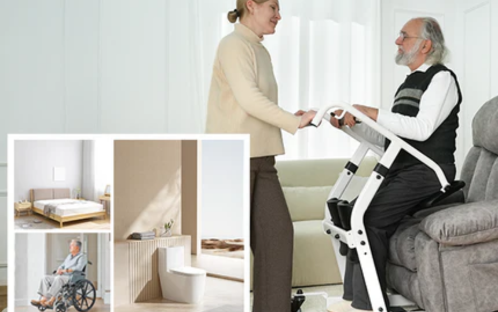
It is important to note that lift chairs are not intended for individuals who require full-body transfers or complete assistance. Users generally need to retain some level of mobility to benefit from a lift chair, as the equipment is designed to assist movement rather than replace it entirely. For users with more severe mobility limitations, alternative equipment such as patient lifts or transfer devices may be more appropriate.

Main Types of Lift Chairs
Lift chairs are available in several designs, each intended to support different mobility needs and use environments. While all lift chairs provide powered assistance during movement, the way they achieve this varies by type.
Recliner Lift Chair
Recliner lift chairs are the most commonly recognized type and are often what people mean when they refer to a “lift chair.” These chairs combine powered lifting with reclining functions and are typically used in living spaces.
In addition to adjusting seat height, recliner lift chairs change the angle of the seat to help users shift weight forward during movement. This design supports transitions from a reclined or seated position toward standing, depending on the user’s mobility.
Floor Lift Chair
Floor lift chairs are designed to assist users from very low starting positions, such as the floor or similarly low surfaces. Rather than focusing on reclining, these chairs prioritize vertical lifting and stability during repositioning.
In many situations, a floor lift chair supports movement from the floor to a stable seated height, which is especially helpful for individuals who may struggle with how to get up from a fall safely on their own. From this seated position, some users may be able to continue standing with minimal assistance, depending on their strength and balance.
In practice, a floor lift chair is more than just a lifting device, it’s a compact electric solution that supports safer repositioning from low positions. For example, the VOCIC AX25 Electric Floor Lift with 2 Wheels pairs a stabilized base with large, easy-rolling wheels so caregivers can quickly position the chair, while the electric lifting mechanism provides smooth and controlled assistance.
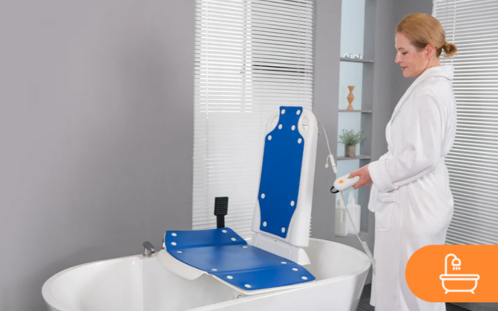
Bath Lift Chair
Bath lift chairs are designed primarily for use in bathroom environments. They provide controlled lowering and lifting to support users during bathing, while accounting for water exposure and surface conditions.
In addition to bathroom use, some bath lift chairs can also be used in dry, indoor settings for general repositioning. In these cases, they function similarly to a floor lift chair by assisting movement from a low seated position to a more stable height. However, their design continues to prioritize safe operation in wet environments rather than everyday seating comfort.
As with other lift chair types, how a bath lift chair is used depends on the user’s mobility and ability to participate in movement.
How to Choose the Right Lift Chair?
Choosing the right lift chair is less about selecting a specific product and more about understanding how the chair will be used. Factors such as the user’s mobility, the environment, and safety requirements all play a role in determining which type of lift chair is appropriate.
User Mobility and Support Needs
The first consideration is how much mobility the user retains. Lift chairs are designed to assist movement rather than replace it, meaning users typically need to participate to some degree. Some individuals can continue standing after repositioning, while others may only require assistance reaching a stable seated position, depending on strength, balance, and coordination.
Intended Use Environment
The environment in which the lift chair will be used directly affects which designs are suitable. Chairs intended for living spaces, bathrooms, or recovery settings are built with different priorities in mind, such as surface conditions, moisture exposure, and available space. Identifying the primary use environment helps narrow down appropriate lift chair types.

Space and Placement Considerations
Space and placement are also important factors. Some lift chairs function as fixed seating, while others are compact and designed to be positioned next to the user when needed. Considering how much room is available, whether the chair needs to be moved, and how it will be stored can help ensure practical day-to-day use.
Safety and Stability Features
Regardless of design, a lift chair should provide controlled and stable movement during use. Smooth lifting, balanced support, and a stable base are essential to reducing sudden shifts that could compromise safety. These features are especially important during transitions, when users may have limited balance or strength.
In some cases, lift chairs are designed with features that support use in multiple environments, including moisture-resistant materials and construction suitable for bathroom settings. For example, models like the VOCIC AX08 Electric Chair Lift demonstrate how an electric chair lift can combine a water-resistant design with a compact, maneuverable form, helping accommodate both dry living spaces and areas with wet surfaces without compromising controlled support.
Lift Chair vs Other Mobility Aids
Lift chairs are often compared with other mobility aids because they all aim to support independence and safer movement. However, different aids address different stages and types of mobility challenges.
A lift chair is designed to assist with position changes, such as transitioning from a seated or low position to a more upright or stable posture. By comparison, a rollator walker supports mobility while walking and standing, helping with balance and endurance rather than lifting or repositioning. While individuals with partial mobility may use both, they serve different moments of movement: lift chairs assist transitions, while rollator walkers assist ongoing ambulation.
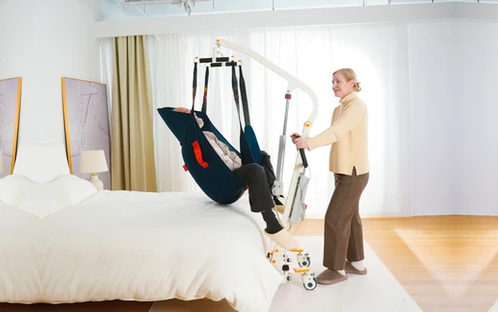
Other devices, such as patient lifts or Hoyer lifts, fall into a separate category of transfer aids. These are intended for full-body transfers and typically require caregiver operation, making them different in purpose and use from lift chairs designed for assisted, user-participated movement.
Conclusion
A lift chair is designed to assist controlled movement during difficult position changes. It supports transitions such as rising from a seated or low position, but it does not replace the user’s ability to stand independently.
Different lift chair designs serve different mobility needs and use environments. Some focus on seat tilt, while others emphasize vertical lifting or environmental safety. Understanding these differences helps users and caregivers choose solutions that match the user’s ability, setting, and level of support required.
FAQ
What is the difference between a lift chair and a recliner?
A lift chair includes a powered lifting mechanism designed to assist with position changes, while a standard recliner is intended primarily for comfort. Recliners may adjust seating position, but they do not provide structured lifting support during transitions.
Does Medicare pay for a lift chair?
In some cases, Medicare may cover part of the cost of a lift chair mechanism when specific medical criteria are met. Coverage typically applies to the lifting mechanism rather than the full chair and usually requires documentation from a healthcare provider. Because eligibility rules and reimbursement conditions can change, it’s important to understand the current requirements before trying to get a lift chair through Medicare.
Are lift chairs safe to use independently?
Lift chairs are designed to support controlled and stable movement, but safe use depends on the user’s mobility, balance, and ability to participate in movement. Some users may use a lift chair independently, while others may require supervision or assistance.
Are lift chairs only for elderly people?
No. While lift chairs are commonly used by older adults, they may also be used by individuals recovering from injury, surgery, or experiencing temporary or long-term mobility limitations. Use is based on mobility needs rather than age.
Share:
How to Get Up from a Fall? A Comprehensive Guide
Best Stand Assist for the Elderly