
For individuals who have fallen, especially older adults, knowing how to safely get up from a fall is a critical skill. Attempting to rise too quickly can lead to further injury or a second fall. This guide provides clear steps for assessing injuries, methods for getting up in different situations, and what to do if standing up isn’t possible.
By following these techniques and adopting long-term fall prevention strategies, individuals can manage fall emergencies with greater confidence and reduce the risk of future accidents.
Calm Assessment and Injury Check Before Getting Up
The moments immediately following a fall are the most critical. Taking a brief pause to check for injuries can prevent a minor accident from turning into a much more serious medical issue.
Staying Calm and Staying Put
The priority after hitting the floor is to remain still. A sudden fall triggers a rush of adrenaline, which can often hide the pain of a serious injury. Instead of trying to get up immediately, it is safer to stay on the floor for a few minutes. This allows the initial shock to pass and provides a clearer sense of whether it is truly safe to move.
Identifying When Moving Is Dangerous
Before attempting to rise, a slow and deliberate body check is necessary. It is important to look for specific signs that moving could be harmful:
- Sharp, localized pain in the hips or back.
- Numbness or a "pins and needles" sensation in the legs.
- Dizziness, confusion, or a severe headache.
- Any limb that appears to be at an unnatural angle.
If any of these signs are present, the person should not try to get up. Attempting to walk on a fractured bone or moving with a spinal injury can cause permanent damage. In these situations, the safest move is to stay put and call for emergency assistance.
Once the assessment is complete and no serious injuries are found, the next step is to focus on safely getting up from the floor. The method you choose will depend on your surroundings and your physical condition. Whether utilizing sturdy furniture for stability, rising unassisted in an open area, or using methods to protect your knees, the following strategies will guide you through each situation.
Now, let's explore how to get up from a fall in three common situations: using sturdy furniture, rising unassisted, and getting up without kneeling.
How to Get Up Using Sturdy Furniture
If there are no serious injuries and stable furniture is within reach, the safest way to get up from a fall is by using a piece of heavy, stable furniture for support. A sturdy chair, a sofa, or a low table can provide the leverage needed to get up off the floor without putting excessive strain on the joints.
Moving Into the Crawling Position
Before attempting to get up, the first goal is to reach a position that allows for controlled movement.
Roll onto the side: Slowly turn the head and shoulders toward the strongest side of the body.
Push up onto hands and knees: Use the arms to lift the torso while pulling the knees forward.
Crawl to support: Slowly crawl toward the nearest piece of sturdy furniture. If crawling is painful, scooting on the buttocks while using the arms for balance is a safer way to move toward a chair to get up.

Steps for Using Support to Rise
After reaching a stable object, follow these steps to get up from the floor safely:
- Place hands on the seat: Put both hands firmly on the seat of the chair or the edge of the sofa.
- Bring the strongest leg forward: While kneeling, lift the strongest leg and place the foot flat on the floor. This provides the power needed to get up.
- Push upward: Using both arms on the furniture and the strength in the forward leg, slowly push up into a standing position.
- Turn and sit: Once you get up, do not walk away immediately. Slowly turn around and sit on the furniture for several minutes to ensure there is no dizziness or hidden pain.
Using furniture is the most reliable method for most people to regain their footing. By breaking the process into small, manageable movements, the body stays protected, and the risk of straining a muscle or falling a second time is greatly reduced.
How to Get Up Unassisted When No Furniture Is Nearby
Falling in an open space, such as the center of a large room where no support is within reach, is challenging because there is nothing to grab onto. In these cases, a person must rely on their own body strength and a specific technique to get up from a fall safely.
Testing Your Physical Flexibility
Before trying to get up without help, it is vital to check if the body has enough strength to perform the move. If the arms feel too weak to push off the ground, or if the legs feel shaky, it is better to stay on the floor and scoot toward a wall or a more stable area. Only attempt to get up from the floor unassisted if there is no significant pain and the joints feel stable enough to support the body’s weight.
The "Shortstop" Method for Safe Get-up
The "Shortstop" method is a controlled way to get up using a wide base of support.
- Get into a downward dog position: From a hands-and-knees position, tuck the toes under and slowly lift the hips toward the ceiling. The body should look like an upside-down "V."
- Walk the hands back: Gradually move the hands backward toward the feet. This shifts the center of gravity over the legs.
- Rest hands on knees: Once the hands reach the knees, stop and hold that position. This is the "shortstop" stance, which provides a stable pause to prevent dizziness.
- Push to a full stand: Press your hands firmly against your thighs and use your leg muscles to gradually push yourself up.
This method allows for a gradual return to a standing position without requiring a sudden burst of energy. By pausing at the knees, the blood pressure has time to stabilize, which helps prevent the lightheadedness that often leads to a second fall.
How to Get Up From a Fall Without Kneeling
For many people, particularly those with chronic knee pain or recent surgeries, kneeling is not an option. Learning how to get up from a fall without putting pressure on the knees is essential for maintaining safety and avoiding further joint damage.
Non-Kneeling Mobility: Scooting and Rolling
If kneeling is not an option, the person should use their stronger muscle groups to move across the floor. The most effective way to reach help or a sturdy object is by scooting on the buttocks. By sitting up and using their arms and heels to pull themselves forward, they can safely reach a safer area without ever touching their knees to the ground.
The Staircase Ascent Method
If a fall occurs near a staircase(or once a person has scooted toward one), the stairs can be used as a built-in ladder to get up from the floor.
- Scoot to the bottom step: Back up to the lowest step until the buttocks are touching it.
- Lift onto the first step: Use the arms to push the body up onto the first step.
- Move up step-by-step: Continue pushing upward, moving one step at a time until the body is high enough to transition into a standing position or until a stable seated height is reached.
The Cushion Seating Leverage
If there are sturdy cushions nearby (from a sofa or chair), they can be used to create a "staircase" effect. By pulling cushions onto the floor and stacking them, a person can slowly lift themselves from the floor to a higher seated position, making it much easier to get up without bending the knees.
Use the Floor Lift Chair
In environments where falls are a regular risk, or for individuals with limited strength, a specialized floor lift chair is the safest and most efficient solution. These devices are designed to do the heavy lifting, eliminating the need for a person to struggle with their own body weight after a fall.
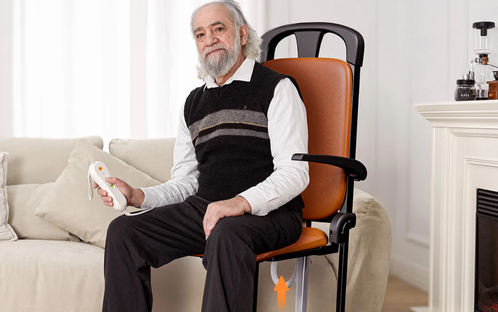
The VOCIC AX15 Heavy Duty Electric Chair Lift is designed to help individuals regain their independence after a fall. With its low-profile seat, users can easily scoot or roll onto the chair without needing to kneel or use leg strength. The electric motor lifts at a gentle speed of 0.27 inches per second, helping prevent dizziness. Once seated, the chair reaches a height of 22.2 inches, making it easy to transfer to a sofa, bed, or wheelchair. This practical solution ensures a safe and smooth transition for users with limited mobility.

What to Do If You Cannot Get Up
In some cases, pain or weakness makes it impossible to get up from a fall. If multiple attempts to rise fail, it is vital to stop trying and focus on signaling for help while maintaining physical safety. When help arrives, it is important to use proper techniques or mechanical aids to lift an elderly person off the floor to avoid causing further injury to the individual or the person assisting them.
Simple Ways to Call for Help
If you are stuck on the floor, your priority is to reach a communication device without overexerting yourself. If a phone is out of reach, shout for help or use a nearby object, like a cane or shoe, to bang loudly against the floor or a door. If you have a medical alert button or smartwatch, activate it immediately. If you're alone, try to scoot toward a window or door to signal neighbors or passersby who might hear or see you.
Survival and Comfort While Waiting
While waiting for help, your main goal is to prevent further complications such as hypothermia or pressure sores. Look for nearby items like blankets, pillows, or clothing to keep warm. If possible, try to move slightly every few minutes to maintain circulation, but avoid any movement that causes pain. Stay calm to regulate your breathing and conserve energy until help arrives.
Long-Term Prevention and Actions
Recovering from a fall is the immediate priority, but preventing the next one is equally important. Taking proactive steps can help rebuild confidence and independence.
Health Monitoring and Professional Input
Always report a fall to a healthcare provider, even if no injuries are visible. Doctors can check for underlying issues like concussions or review medications that may cause dizziness. Keeping a record of when and where the fall happened can help identify specific risks to address.
Home Modifications
Simple changes can significantly lower the risk of future accidents. Key improvements include removing loose rugs, clearing clutter from walkways, and ensuring all rooms are well-lit. Installing grab bars in bathrooms and keeping safety tools, such as a mobile phone or a lift chair, within reach adds a vital layer of protection.
Strengthening Exercises
Improving balance and core strength is the best defense against falling. Simple activities like chair squats, heel-to-toe walking, or Tai Chi strengthen the legs and improve stability. While working on these physical improvements, incorporating walking aids for balance into daily routines can offer immediate support and boost confidence. These exercises, combined with the right equipment, not only help prevent falls but also provide the physical strength needed to get up from a fall more effectively if one does occur.
Conclusion
Falling can be serious, but having a plan turns panic into control. Whether using sturdy furniture, a lift chair like the VOCIC AX15, or the "shortstop" method, knowing how to safely get up is key to maintaining independence. Combining these strategies with home safety improvements and regular exercise can significantly reduce the impact of falls on daily life.
FAQ
1. How to look after oneself after a fall?
Rest immediately and monitor for pain or bruising over the next 24 to 48 hours. Staying hydrated and informing a family member or doctor about the incident is important even if no injuries are apparent.
2. What are red flag symptoms after a fall?
Emergency help should be sought if there is a loss of consciousness, a severe headache, confusion, an inability to move a limb, or persistent dizziness.
3. What is the most significant factor for falls in older adults?
Muscle weakness and balance impairment are the leading causes. Environmental hazards and medication side effects are also major contributing factors.
4. What not to do after a fall?
One should not try to stand up immediately. Rushing can worsen an undetected injury or cause a loss of balance that leads to a second fall.
Share:
Preventing Falls in the Elderly: A Comprehensive Guide
What Is a Lift Chair?