
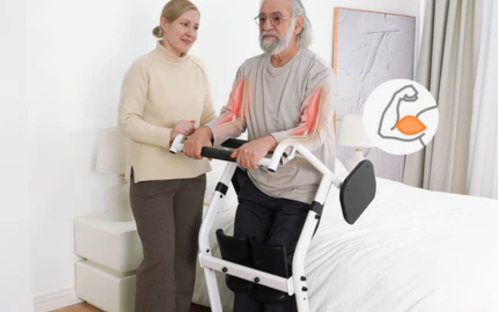
For many seniors, simply standing up from a chair or bed can be a challenging and potentially unsafe task. Many falls at home occur during transitional movements, especially when rising from a seated position.
A stand assist isn't just a luxury, it’s a safety essential that helps seniors stay independent. This guide covers the best devices of 2026 to help you find the right support for your home.
What Is a Stand Assist?
A stand assist is a mobility aid designed to support individuals when moving from a seated position to a standing position. These devices are typically placed near commonly used areas such as chairs, beds, or toilets to provide timely support during daily movements. It includes simple support devices such as rails, bars, and frames, as well as powered options like sit-to-stand lifts.
Why Should the Elderly Use a Stand Assist?
Using a stand assist offers more than just physical support. It addresses the core challenges of aging by focusing on safety and physical preservation.
Enhance Safety and Reduce Fall Risk
The transition from sitting to standing is a high-risk moment for falls due to sudden changes in blood pressure or loss of balance. A stand assist provides a reliable anchor point. This ensures that if a senior feels dizzy or weak while rising, they have a stable surface to grip immediately.
Promote Independence and Confidence
Many seniors limit their activities because they fear they cannot get back up without help. Having a dependable device nearby removes this psychological barrier. It allows elderly individuals to move around their homes freely without waiting for a caregiver or family member to assist them.
Reduce Strain on Joints and Muscles
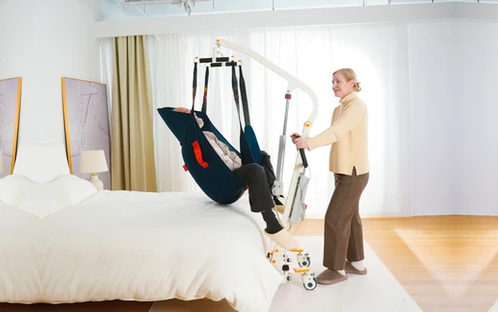
Standing up requires significant strength from the legs and stability from the core. For seniors with arthritis or chronic joint pain, this movement can be difficult and uncomfortable. Depending on the design, a stand assist may allow the user to use their arms or receive guided or powered support to share the load. This helps reduce stress on the knees and hips while making the movement safer and more controlled. For seniors who cannot safely participate in standing at all, a patient lift transfer chair for home may be required instead.
Types of Stand Assist for the Elderly
Selecting the right stand assist depends on the user's physical strength and the specific furniture they use. Here are the primary categories available for home safety.

Stand-Assist Rails and Poles
Stand-assist rails and poles are common mechanical support options used in home settings. Security poles are floor-to-ceiling tension bars that can be placed in various areas of a room. Stand-assist rails are typically smaller frames that slide under a mattress or couch cushion to provide a sturdy handhold for standing.
Furniture Risers
Risers are heavy-duty blocks placed under the legs of chairs, sofas, or beds. By increasing the height of the seat, they reduce the distance a senior needs to move to reach a standing position. This is a simple and cost-effective way to make existing furniture much safer.
Lifting Cushions
These portable seats can be placed on top of any standard chair. They use either a self-powered hydraulic spring or an electric motor to gently lift the user. When the person starts to stand, the cushion rises automatically to provide an upward boost.
Rise and Recline Chairs
These are fully motorized armchairs designed for maximum comfort and utility. With the push of a button, the entire chair lifts and tilts forward. This motion slowly guides the senior into a standing posture without requiring any effort from their legs or arms.
Sit-to-Stand Lifts
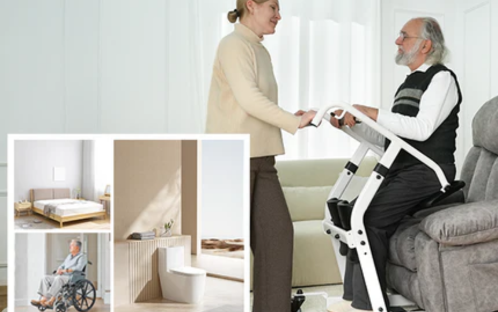
Sit-to-stand lifts are designed for individuals with significant mobility limitations who can still bear some weight and participate in standing. These devices typically include a foot platform and a manual or electric mechanism to assist the user into a standing position. They are especially helpful for caregivers who need to support safe transfers between beds, chairs, and wheelchairs. Because correct positioning and participation matter, understanding how to use a sit-to-stand lift is important for safe and effective transfers.
Best Stand Assist for the Elderly in 2026
The following stand assist products represent reliable options for different mobility levels and home environments. From powered assistance for more demanding transfers to simple, portable support aids, each solution addresses a specific set of needs rather than a one-size-fits-all approach.
VOCIC AY03 Upgrade Sit-to-Stand Lift
The VOCIC AY03 Upgrade Sit to Stand Lift Assist is designed for seniors who can still bear some weight and actively participate in standing but require powered assistance for safety and stability. Its motorized lifting system reduces physical strain on both the user and the caregiver while supporting a controlled, guided transition from sitting to standing.
Unlike fully passive lifts, the AY03 works best for individuals with limited lower-body strength who can follow instructions and maintain basic trunk stability. The upgraded design emphasizes smooth movement and a stable base, making it suitable for repeated daily transfers from beds, chairs, or sofas in a home care setting.
Best for: Seniors with partial weight-bearing ability who need powered assistance for safe sit-to-stand transfers at home.
Vive Health Multi-Room Stand Assist
The Vive Health Multi-Room Stand Assist is built for flexibility and everyday convenience. With a wide, stable base and padded dual handles, it provides reliable leverage for standing from a variety of seating surfaces.
Because it does not require permanent installation and can be easily moved between rooms, this stand assist is well-suited for seniors who remain fairly mobile but need consistent support when standing up from chairs, couches, or recliners.
Best for: Seniors who need portable standing support in multiple rooms without permanent installation.
Vive Health Stand Assist Cane
The Stand Assist Cane is a compact option designed for seniors who want minimal equipment without sacrificing functionality. Its dual-handle design includes a fold-out secondary grip that offers extra leverage when rising from a seated position.
Once standing, the cane functions as a standard walking aid, making it especially useful for active seniors who need occasional assistance at home and reliable support when out in the community.
Best for: Active seniors with good balance who need light assistance when standing and walking.
Senior Stander Security Pole & Curve Grab Bar
The Senior Stander Security Pole is a tension-mounted support solution that installs between the floor and ceiling without drilling or permanent modification. Its rotating Curve Grab Bar locks at multiple angles, allowing users to pull themselves up and then pivot safely toward a rollator walker, wheelchair, or nearby surface.
This type of stand assist is ideal for seniors with adequate upper-body strength who benefit from a fixed, stable support point near beds, seating areas, or transfer zones.
Best for: Seniors with sufficient upper-body strength who prefer a fixed support solution without permanent installation.

How to Choose the Right Stand Assist for the Elderly
Choosing the right stand assist starts with understanding the senior’s physical abilities, living environment, and daily needs. Different devices provide different levels of support, so matching the product to real usage scenarios is essential for safety and comfort.
Assessing Mobility and Physical Strength
Mobility and physical strength are the most important factors to consider. Some stand assists rely on the user’s ability to push or pull themselves up, while others provide powered support. Choosing a device that matches the senior’s current abilities helps reduce fall risk and caregiver strain.
Evaluating Available Space at Home
Available space at home can limit the practicality of stand-assist options. Compact solutions work well in bedrooms and bathrooms, while larger devices require enough clearance for safe movement. Evaluating room size and furniture placement in advance helps avoid installation or usability issues.
Choosing Between Portability and Stability
Some stand assists are designed to be moved easily between rooms, while others focus on maximum stability in a fixed location. Portable options offer flexibility, while more stable devices provide consistent support in high-use areas. The right choice depends on how often and where assistance is needed.
Determining Your Budget
Budget is another important consideration, as stand assist devices range from simple manual aids to more advanced powered solutions. A higher price does not always mean better suitability. The best option is one that meets the senior’s needs while fitting comfortably within the household budget.
Conclusion
Stand assist devices play an important role in helping older adults maintain mobility, safety, and confidence in daily life. From simple support aids to powered solutions, each type of stand assist serves a different purpose based on physical ability, home layout, and lifestyle needs.
Rather than focusing on a single product, the key is understanding how and where assistance is needed. A well-matched stand assist can reduce fall risk, ease physical strain, and support independence, making everyday movements more comfortable for both seniors and caregivers.
FAQ
1. What are the alternatives to bed rails for the elderly?
Alternatives to bed rails include bed assist bars, security poles, grab bars, and low-profile transfer handles. These options provide support for sitting up or standing without fully enclosing the bed, which can reduce the risk of entrapment and improve ease of movement.
2. What is the difference between a grab bar and an assist bar?
A grab bar is typically fixed to a wall and designed to support body weight during standing or transfers. An assist bar is often attached to furniture or beds and is intended to provide leverage rather than full weight support. The choice depends on where support is needed and how much assistance the user requires.
3. When should bed rails not be used?
Bed rails should not be used for seniors who are confused, have limited mobility, or are at risk of climbing over the rail. They may also be unsuitable for individuals who cannot reposition themselves safely, as improper use can increase the risk of falls or entrapment.
4. How does a bed assist bar work?
A bed assist bar is installed near the side of the bed and provides a stable handhold for sitting up or standing. It helps users push themselves into position while maintaining balance, making transfers in and out of bed safer and more controlled.
Share:
What Is a Lift Chair?
Bath Lift Chair Vs Floor Lift Chair: What’s the Difference?