
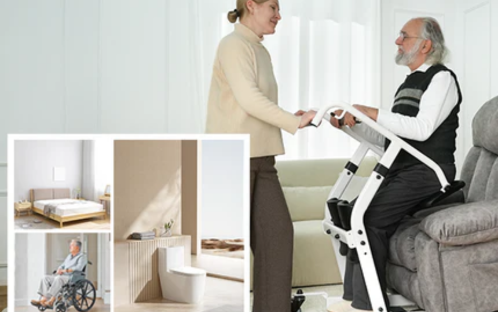
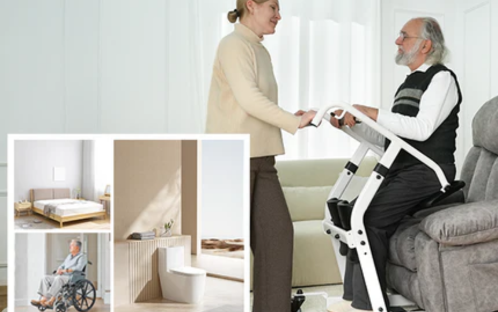
For many seniors and individuals recovering from chronic illness, the simple act of standing up can be a major hurdle. A sit-to-stand lift is a specialized tool designed to help users transition safely from a bed, chair, toilet, or sofa to a standing position, allowing them to be transferred to another seat with ease.
Since these devices usually require the assistance of a caregiver or family member, understanding how they work and learning the correct operating procedures is essential for the safety of both the user and the assistant. This guide will provide the necessary steps to ensure every transfer is smooth, secure, and comfortable.
What is a Sit-to-Stand Lift?
A sit-to-stand lift, also known as a standing assist device, is a mobility aid designed to help individuals with limited strength transition safely from a seated to a standing position. When you choose the lift for old people, it is important to understand that the patient is supported either by a sling that wraps around their back and waist or by a pivoting seat that rotates underneath them to ensure stability.
These lifts are highly versatile, allowing a caregiver to move an individual easily between various surfaces, including beds, wheelchairs, toilets, and shower chairs. Unlike a full-body lift, a sit-to-stand device encourages patients to bear some of their own weight and actively participate in the transfer. This collaborative approach significantly reduces physical strain on the caregiver while promoting the user's independence and dignity during daily routines.
Benefits of Using a Sit-to-Stand Lift
Using a sit-to-stand lift offers significant advantages over manual lifting, improving the quality of care for both the patient and the caregiver.
- Promotes Physical Rehabilitation: Unlike full-body lifts that do all the work, a sit-to-stand device encourages users to use their own leg and core muscles. This active participation helps maintain muscle tone and bone density, which is vital for seniors and those in recovery.
- Enhances User Safety and Dignity: Manual transfers can be frightening and unstable. A lift provides a smooth, controlled motion that reduces the risk of falls. It also preserves the user's dignity by making the transition feel more like a natural standing movement rather than being "carried."
- Reduces Caregiver Strain: Lifting an adult manually is one of the leading causes of back and shoulder injuries among caregivers and family members. A sit-to-stand lift handles the heavy lifting, allowing the caregiver to focus on guiding the machine and ensuring the patient's comfort.
- Versatility in Daily Care: These devices are designed to fit into tight spaces, making them ideal for various daily tasks. Whether moving from a sofa to a wheelchair or assisting with toileting and hygiene, the lift's maneuverability simplifies transitions across different rooms and surfaces.
- Better for the Body’s Internal Systems: Staying in bed or sitting for too long can slow everything down. By helping a person stand up regularly, the lift helps keep blood flowing properly and makes it easier for the body to digest food and go to the bathroom. It’s a simple way to keep the body "moving" on the inside as well as the outside.

Assessment of User Suitability
Before operating a sit-to-stand lift, it is crucial to determine if the device is appropriate for the individual's specific condition. Because this lift requires active participation, a caregiver must evaluate the following three areas to ensure a safe transfer.
Physical Requirements
The patient must have sufficient core strength to maintain a seated position. Specifically, they should be able to sit upright on the edge of a bed or chair with minimal assistance and without leaning heavily to one side. If an individual cannot control their upper body balance at all, a full-body Hoyer lift may be a safer alternative.
Weight-Bearing Standards
One of the most important requirements is that the loved one must be able to bear some weight on at least one leg. The equipment is designed to assist the standing motion, not to replace the legs entirely. If the person being lifted has no strength to support their own weight, they risk injury to their knees or sliding out of the sling during the process.
Cognitive and Cooperative Readiness
The patient must be able to understand and follow simple instructions. A successful transfer requires them to hold the handrails as directed and lean forward slightly as the lift activates. If the individual is experiencing severe confusion, agitation, or is unable to communicate, the risk of a fall or injury increases significantly.
How to Use Sit-to-Stand Lifts: Step-by-Step Instructions
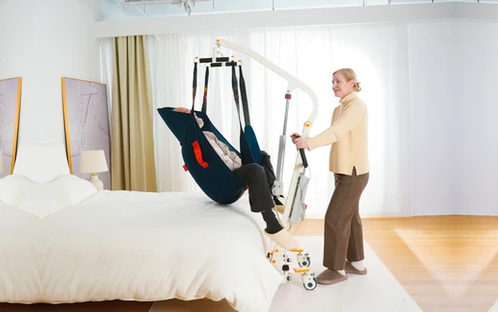
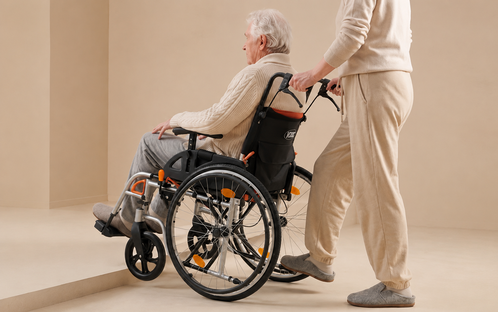
Safe operation depends on attention to detail, for example, when you need to transfer a patient from bed to wheelchair safely. Follow these stages to ensure a smooth and secure transfer.
Pre-Use Inspection and Positioning
Before bringing the device to the patient, perform a quick safety check. Ensure the battery is charged (if electric) and the emergency stop button is disengaged.
- Clear the Path: Remove any rugs or obstacles between the starting point and the destination.
- Position the Individual: Ensure the person is sitting at the very edge of the bed or chair with their feet flat on the floor.
- Approach: Open the lift's base legs (if adjustable) to fit around the chair, then slide the lift's footplate directly under the patient's feet.
- Lock the Brakes: Once the lift is in position, lock the wheels on the bed or wheelchair, but leave the lift wheels unlocked during the actual rise to allow the machine to find its natural center of gravity (unless the manufacturer specifically states otherwise).
Sling or Seat and Knee Pad Setup
Depending on the model of the lift, the individual will be supported by either a fabric sling or a mechanical pivoting seat.
- Position the Support: Depending on your model, either slide the fabric sling behind the lower back and bring the straps under the armpits to the hooks, or swing the pivoting seat halves behind the individual until they meet securely underneath the buttocks.
- Ensure Balance: If using a sling, always use the same color-coded loops on both sides to keep the lift level.
- Adjust Knee Pads: Position the knee pads comfortably against the upper shins, just below the knees. This creates a stable "pivot point" that prevents the legs from sliding forward during the standing motion.

Safe Activation and Standing
This stage is a collaborative effort that utilizes the individual's remaining strength to achieve a natural standing motion. Clear communication ensures they feel secure and ready before any movement begins. Starting the lift slowly helps the body adjust and prevents dizziness. The goal is to reach a stable, semi-standing position that provides enough clearance to move while keeping the person fully supported.
- Active Participation: Ask the individual to grasp the handrails and lean their weight slightly forward (the "nose over toes" position).
- The Rise: Slowly activate the lift until the person is in a semi-standing position—high enough to clear the seat but still fully supported.
- Monitor Safety: Watch their posture and expression closely. Stop immediately if they feel dizzy or if the support system shifts.
Transfer and Safe Lowering
Once upright, the caregiver focuses on maneuvering the lift smoothly through the home, ensuring stability and preventing swinging. The final lowering is crucial. The person should be carefully aligned with the new seat and lowered safely before detaching the equipment.
- Steer Carefully: Use the push handles to maneuver the lift toward the destination.
- Final Positioning: Ensure the individual’s back is squarely centered over the new seating surface.
- The Descent: Slowly lower the person until they are firmly seated. Once they are stable, detach the sling or swing the pivoting seat out of the way before moving the lift.
Recommended Sit-to-Stand Lift
The VOCIC AY03 Upgrade Sit-to-Stand Lift is a professional-grade mobility aid designed to simplify daily transfers between beds, chairs, and bathrooms. Its medical-grade construction prioritizes user safety while offering the versatility needed to support individuals through various stages of their daily care routine.
- 180° Split-Seat Design: The seat halves swing open horizontally, allowing the caregiver to secure them under the patient without any manual lifting.
- Adjustable Base: A convenient foot pedal adjusts the base width to fit around wide armchairs or through narrow bathroom doors.
- Safety & Stability: Equipped with a four-wheel locking system and non-slip handrails to ensure the device remains stationary during use.
- Fully Waterproof: Built with rust-resistant materials, making it ideal for use as a shower chair or bedside commode.
Conclusion
Choosing the right sit-to-stand lift can transform the caregiving experience from a physically demanding task into a safe, dignified routine. Devices like the VOCIC AY03 do more than just move a person from one point to another; they help maintain physical strength, improve circulation, and provide a sense of independence for the individual. By understanding the proper assessment and operating steps, you can ensure a higher quality of life for your loved ones while protecting your own physical health as a caregiver.
FAQ
1. Who should not use a sit-to-stand lift?
Individuals who cannot bear any weight on their legs or lack the core strength to sit upright safely should avoid these lifts. Additionally, those with severe cognitive impairments or unhealed spinal/hip fractures may not be suitable candidates, as they may be unable to follow safety instructions or handle the physical pressure of the standing motion.
2. Does Medicare pay for sit-to-stand lifts?
Medicare Part B typically covers sit-to-stand lifts as Durable Medical Equipment (DME), provided they are deemed medically necessary. You will generally need a doctor’s prescription and a therapist's evaluation to prove that the device is essential for the patient's mobility within the home.
3. Does a sit-to-stand lift require two people?
No, most modern sit-to-stand lifts, including the VOCIC AY03, are designed for single-caregiver operation. Because the machine handles the heavy lifting, one person can safely manage the transfer as long as they follow the proper positioning and safety protocols.
4. What are the 5 P's of lifting?
To ensure a safe and successful transfer, caregivers should remember the 5 P's:
- Plan: Know your route and ensure the destination is ready.
- Position: Align the lift and the patient correctly before starting.
- Posture: Keep your back straight and use your legs to maneuver the lift.
- Proximity: Keep the lift close to the patient to maintain a stable center of gravity.
- Pivot: Move your feet to turn the lift rather than twisting your waist.
Share:
Is Walking Good for Arthritis?
VOCIC to Showcase Human-Centered Mobility Solutions at APTA CSM 2026