
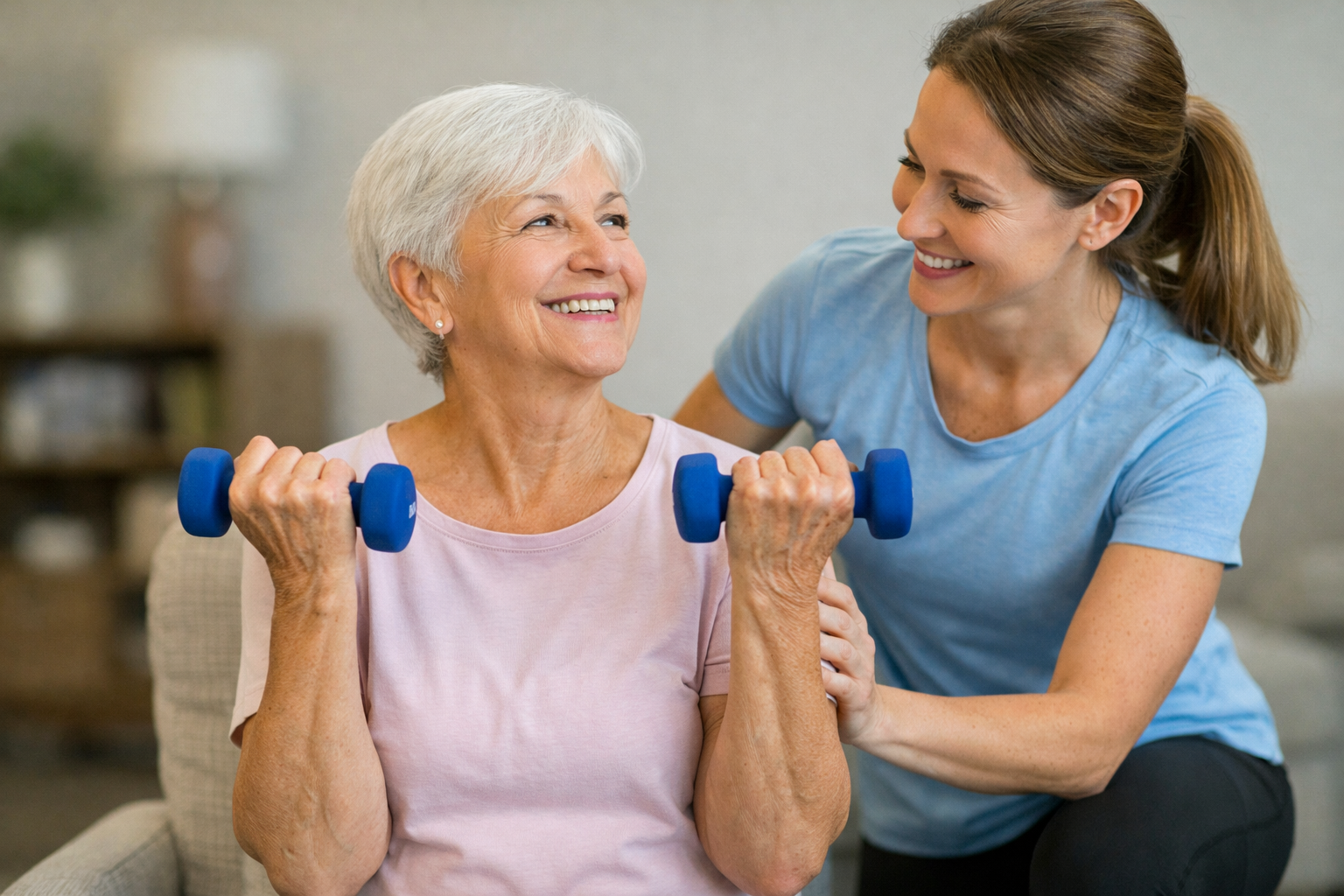
The best gentle exercise for older adults at home is simple, low-impact movement that supports balance, strength, and flexibility. It should feel safe, manageable, and easy to repeat. A good routine does not need to be intense. It needs to help the body move better in daily life.
Why Gentle Exercise Matters for Older Adults
Gentle exercise helps older adults stay steadier, stronger, and more mobile. That matters because daily life depends on more than stamina. It depends on balance, leg strength, joint movement, and the ability to move with control.
Supports Balance and Everyday Stability
Balance exercises help older adults feel more stable during routine movement. That matters because better balance is one of the most practical foundations for preventing falls in the elderly, especially during everyday tasks like turning, stepping over thresholds, or walking across the home.
This is why balance work matters at home. Most movement problems do not show up during formal exercise first. They show up during ordinary tasks.
Helps Maintain Strength for Daily Tasks
Daily tasks keep asking for strength. Standing up from a chair, getting dressed, carrying light items, and climbing stairs all depend on it.
The goal is not heavy training. It is keeping enough strength for normal life. Gentle strength work can make everyday movement feel easier and more controlled, and it can also be a practical starting point for older adults who want to learn more about building muscle after 50.
Reduces Stiffness and Supports Mobility
Gentle stretching and mobility work can make movement feel less tight and less restricted. That is especially useful for older adults who sit for long periods or feel stiff when they first stand up.
Simple movements often do enough. The point is not to push range of motion. It is to help the body move more comfortably through daily positions.
How to Start Gentle Exercise Safely at Home
A home routine works best when it feels safe from the start. The setup matters more than doing a long list of exercises.
Choose a Stable and Comfortable Setup
Use a sturdy chair, enough open floor space, and a stable surface nearby if balance feels uncertain. A wall, kitchen counter, or heavy table can make standing exercises safer.
Avoid anything that adds risk. A rolling chair, cluttered floor, or slippery surface can make simple movement harder than it needs to be.
Start Small and Build Gradually
Start with a few repetitions and short sessions. Add more only when the movement feels comfortable and controlled.
This works better than doing too much too soon. A smaller routine that gets repeated is far more useful than a harder routine that gets dropped after a few days.
Use Support When Needed
Support is often the best way to begin. Holding the back of a chair or staying close to a wall can make balance work feel more manageable.
That kind of support helps older adults focus on posture and control instead of worrying about falling.
Know When to Check With a Doctor First
Older adults should check with a doctor first if exercise feels unsafe because of dizziness, chest pain, a recent fall, severe joint pain, or a major change in mobility.
That is especially important when symptoms are new, getting worse, or making normal walking feel less safe.
Best Gentle Exercises for Balance, Strength, and Flexibility
The best gentle home exercises are the ones that are easy to learn and easy to repeat. A useful routine does not need much equipment. It just needs movements that support stability, strength, and joint mobility.

Standing Marches
Standing marches are a simple balance and coordination exercise. They help older adults practice controlled stepping and weight shifting at home.
Stand behind a sturdy chair. Lift one knee, lower it, then switch sides. Move slowly. Small steps are fine.
This exercise is useful because it trains a basic walking pattern while keeping the movement controlled.
Heel Raises
Heel raises strengthen the lower legs and help with ankle control. That matters because the ankles play a big role in staying steady during standing and walking.
Stand behind a chair, hold on lightly, and lift the heels off the floor. Lower slowly. Control matters more than height.
Sit-to-Stands
Sit-to-stands are one of the most practical gentle strength exercises for older adults. They directly train the movement of getting up from a chair, which is something people do many times every day.
Use a sturdy chair. Sit tall, lean slightly forward, stand up, then sit back down with control. If needed, use the hands at first.
This exercise works because it trains strength in a way that connects directly to daily life.
Wall Push-Ups
Wall push-ups are a simple way to build upper-body strength without the strain of floor push-ups. They are a good option for older adults who want gentle resistance work at home.
Stand facing a wall. Place the hands against it, bend the elbows, then press back. The farther the feet are from the wall, the harder it becomes.
Seated Leg Lifts
Seated leg lifts are a good option for people who want gentle lower-body work with more stability. Sit upright in a chair, straighten one leg, lower it, then switch sides.
This movement helps train the thighs without adding the balance demands of standing exercises.
Neck and Shoulder Rolls
Neck and shoulder mobility work can reduce tension and help movement feel less restricted.
Keep the motion slow. Roll the shoulders gently. Turn the head side to side within a comfortable range. The goal is ease, not a deep stretch.
Seated Hamstring Stretch
A seated hamstring stretch can help reduce tightness in the back of the legs, which often affects comfort when standing and walking.
Sit near the front of a chair, extend one leg, keep the back long, and lean forward slightly until a gentle stretch is felt. Do not force it.
Ankle Circles
Ankle circles are small, but useful. They help improve ankle mobility and are easy to add even on lower-energy days.
They work especially well at the start of a session or after long periods of sitting.
Best Chair Exercises for Older Adults at Home
Chair exercises are a strong option for older adults who want gentle movement with more stability. They also work well on lower-energy days or for people who do not feel fully confident with standing exercise. For those who need more support while moving around the home, a rollator walker can also make daily activities feel safer and easier to manage.
Seated Marching
Seated marching is a simple way to add movement and coordination without standing. Sit upright and lift one knee at a time.
This works well as a warm-up. It raises movement gradually and can help loosen the hips after sitting.
Seated Arm Raises
Seated arm raises are useful for gentle upper-body movement and posture awareness. Lift the arms forward or out to the sides, then lower them slowly.
The range can stay small. The goal is controlled motion, not lifting high.
Seated Knee Extensions
Seated knee extensions help build gentle leg strength with more support. Sit tall, straighten one knee, lower it, then switch sides.
This is a practical choice for older adults who want lower-body work but do not feel ready for repeated standing exercises.
For older adults who need more support before or after exercise, a mobility aid can make gentle home movement easier to manage. The VOCIC Z51 Shift Combo 2 In 1 Rollator - Transport Chair Walker fits naturally here because it supports walking, provides a seat for rest, and can convert into a transport chair when needed. That makes it especially useful for users whose energy or stability changes during the day, since it can support light activity without forcing every part of the routine to happen on foot. The Z51 is a 2-in-1 rollator and transport chair with adjustable handles, a foldable design, and a raised backrest for safer seating.
How to Build a Simple Gentle Exercise Routine at Home
A good home routine should feel easy to follow. Too many exercises can make it harder to stay consistent.

Combine Balance, Strength, and Flexibility
The simplest approach is to mix a few exercises from different categories. That creates a more useful routine than doing only one type of movement.
A simple session might include:
- Standing marches
- Heel raises
- Sit-to-stands
- Wall push-ups
- Ankle circles
- Seated hamstring stretch
That gives the routine some balance work, some strength work, and some mobility work without making it too long.
Focus on Consistency Over Intensity
A shorter routine done regularly is usually more helpful than a harder one done once in a while. Many older adults do better with a brief daily session than with a long routine that feels tiring or discouraging.
This is one reason gentle exercise works so well at home. It lowers the barrier to getting started and makes it easier to keep going.
Adjust the Routine to Energy and Ability Levels
Some days are better for standing exercises. Some days call for chair exercises. That is normal.
The routine should match how the person feels that day. On lower-energy days, seated marching, seated arm raises, and ankle circles may be enough. On stronger days, it may make sense to add sit-to-stands or heel raises.
A flexible routine is often the one that lasts.
Conclusion
The best gentle exercise for older adults at home is not the most complicated routine. It is the one that feels safe, useful, and realistic enough to repeat.
Balance drills, light strength work, chair exercises, and simple stretches can all help older adults move more comfortably and stay more confident in daily life. Start small, use support when needed, and focus on control instead of intensity. Over time, even a short routine can make everyday movement feel easier.
FAQ
What Is the Best Gentle Exercise for Older Adults?
The best gentle exercise is usually a mix of balance, strength, and flexibility work. No single movement does everything. A simple routine with standing marches, sit-to-stands, wall push-ups, and gentle stretches is often a strong place to start.
How Often Should Older Adults Exercise at Home?
Older adults should aim to move regularly and include strength and balance work each week. CDC recommends that older adults include muscle-strengthening activity and balance work as part of their weekly routine, adjusted to their abilities and conditions.
Are Chair Exercises Good for Seniors?
Yes. Chair exercises are a good option for seniors who want gentle movement with more stability. They are especially useful for beginners, lower-energy days, or people who do not feel fully confident with standing exercise.
What Exercises Help Seniors Improve Balance at Home?
Standing marches, heel raises, and sit-to-stands are all useful home balance exercises. They help train weight shifting, ankle control, and everyday movement patterns. CDC includes standing from sitting and similar balance-focused activities in its guidance for older adults.
When Should an Older Adult Avoid Exercise or Ask a Doctor First?
An older adult should ask a doctor first if exercise feels unsafe because of dizziness, chest pain, a recent fall, severe pain, or a major change in mobility. Exercise should match current ability, not push through warning signs.
Share:
7 Signs an Elderly Person Needs a Walking Aid
Steps Per Day Goal by Age: How Many Steps Should You Aim For?