
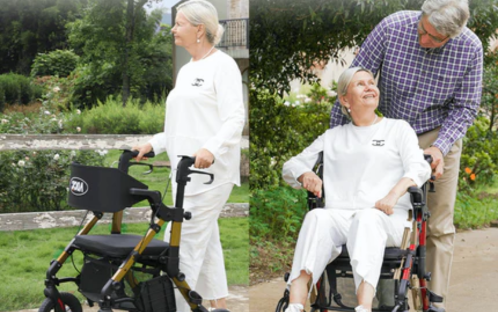
An elderly person may need a walking aid when walking becomes unsteady, tiring, or less safe than before. Frequent stumbles, holding onto furniture, pain-related slowing, and fear of falling are often early signs that extra support may help reduce fall risk and make daily movement safer.
Why Recognizing the Need for a Walking Aid Matters
Walking changes are easy to overlook when they develop gradually. Recognizing the need for a walking aid early can help reduce fall risk and protect daily independence.
Early Signs Can Help Prevent Serious Falls
Repeated stumbles and near-falls are often early warnings that balance recovery is becoming less reliable. If these episodes happen during turning, stairs, or walking around furniture, fall risk is already rising.
Delayed Support Can Reduce Daily Independence
Mobility decline often shows up first as avoidance. An older adult may stop taking longer walks, avoid errands, or hesitate to move without help. Once activity drops, strength and stability often decline further, making daily movement harder.
The Right Walking Aid Can Improve Safety and Confidence
The right walking aid can make walking safer by adding the level of support the person can no longer maintain alone. A cane may help with mild balance loss, while a walker offers more stability when unsteadiness is more consistent.
The goal is not to wait until walking becomes impossible. It is to notice when walking is no longer safe, efficient, or confident without extra support.
Key Signs an Elderly Person May Need a Walking Aid
A single stumble does not always mean much. Repeated instability, support-seeking behavior, or fear-based avoidance usually matter more because they show that walking is becoming less controlled in daily life.
Frequent Stumbles, Trips, or Near-Falls
Repeated stumbles or near-falls often mean balance recovery is getting weaker. The body may still catch itself, but it is doing so less reliably. If these close calls happen during turning, stepping over thresholds, or changing direction, extra support may be needed.
Holding Onto Walls or Furniture for Balance
Regularly reaching for walls, counters, or furniture usually means ordinary walking no longer feels fully secure. This is easy to miss at home because support is always nearby. If someone “furniture walks” between rooms, that is already a meaningful sign.

Feeling Unsteady on Uneven Ground or Stairs
Uneven ground and stairs demand more balance control than flat indoor floors. Small changes in coordination or leg strength often show up there first. Watch for hesitation, sharper slowdowns, or a stronger reliance on railings in these situations.
Walking More Slowly Because of Pain or Weakness
Slower walking becomes more concerning when it is driven by pain, weakness, or instability. A person may shorten steps or move cautiously because each step feels less reliable. If walking speed drops along with visible effort or discomfort, support may help improve safety.
Getting Tired After Short Distances
Walking can become more tiring when the body has to work harder to stay steady. Balance that once felt automatic may now require more effort with every step. If someone needs frequent pauses during routine movement, not just longer outings, it may be time to consider extra support.
Struggling to Stand Up and Start Walking
Standing up and taking the first few steps requires strength, balance, and control at the same time. Difficulty here often points to lower-body weakness, joint pain, or reduced stability. Repeated rocking, pushing hard through the arms, or pausing before walking are common warning signs.
Avoiding Walks or Going Out Due to Fear of Falling
Fear of falling often changes behavior before it changes words. Someone may avoid stairs, turn down errands, or stop going out because walking feels less predictable. When movement starts shrinking because of fear, both safety and independence are already being affected.
These signs do not all point to the same level of need. Some suggest mild support may be enough, while others point to a need for more stability. For families comparing the best walking aids for balance, the next step is understanding which type of support matches the actual walking problem.
Cane vs. Walker vs. Rollator
Not every walking aid provides the same level of support. The right choice depends on whether the main issue is mild imbalance, regular unsteadiness, leg weakness, or fatigue during longer walks.
When a Cane May Be Enough
A cane may be enough when support needs are mild and walking is still mostly controlled. It works best for light balance support or mild one-sided pain or weakness. If someone is unsteady only in certain situations, such as longer walks or uneven ground, a cane may be enough.
When a Walker Offers More Support
A walker offers more support because it gives the body a wider and more stable base. It is often a better choice when unsteadiness is more consistent, support is needed indoors, or balance problems show up even on flat ground. If someone is already relying on walls or having repeated near-falls, a walker may be safer than a cane.
When a Rollator May Be More Practical
A rollator walker may be more practical for someone who can still walk but needs support over longer distances. It can work well for users who tire easily, want smoother movement, or benefit from having a seat during outings. It is usually less suitable when balance is very poor and the user cannot control a wheeled aid safely.
When an older adult can still walk but becomes tired, unsteady, or less confident over longer distances, a rollator is often more practical than a basic walker. The added support can make movement smoother, while a seat helps reduce the strain of continuous walking.
In situations where walking ability changes from moment to moment, a more flexible solution may work better. TheVOCIC Z51 Shift Combo 2 In 1 Rollator - Transport Chair Walker is a good example. It supports independent walking when the user feels steady enough to move on their own, but it can also function as a transport chair when fatigue, weakness, or longer outings make continuous walking less realistic.

Comparison Chart
|
Walking Aid |
Best For |
Support Level |
Typical Use |
Less Ideal For |
|
Cane |
Mild balance issues, light one-sided support needs |
Light |
Short walks, early support needs |
Repeated near-falls, broad instability |
|
Walker |
Balance problems, leg weakness, arthritis, daily stability needs |
High |
Indoor safety, rehab, regular support |
People who only need occasional light help |
|
Rollator |
Mobile users who need support plus rest breaks |
Moderate |
Longer walks, outings, fatigue management |
Severe instability with poor control of a wheeled aid |
The best aid is not the least noticeable one. It is the one that makes walking safer, steadier, and easier to manage in everyday life.
When to Talk to a Doctor or Physical Therapist
A walking aid can improve safety, but it does not replace evaluation when walking is clearly changing. If balance problems are getting worse, professional input can help identify the cause and the right level of support.
After a Fall or Near-Falls
A recent fall, or repeated near-falls, should not be ignored. These events often mean walking is already becoming less stable. When close calls keep happening, it is safer to seek professional advice rather than wait for a more serious fall.
When Walking Feels More Painful or Unsteady
Worsening pain, weakness, dizziness, or instability may point to more than a simple support need. In some cases, the issue may also relate to joint problems, medication effects, or other health changes. If walking feels noticeably harder or less controlled, evaluation is a better next step than guessing.
When You Are Unsure Which Walking Aid Is Best
Uncertainty is a good reason to ask for help. The wrong device can provide too little support or encourage awkward movement. If someone looks hunched, unstable, or uncomfortable while using a cane, walker, or rollator, the fit or type may be wrong.
The goal is not just to choose a walking aid. It is to choose the right support at the right time, before mobility becomes less safe or more limited.
Conclusion
The need for a walking aid usually shows up before a major fall. Repeated stumbles, furniture walking, instability on stairs or uneven ground, slower walking due to pain or weakness, early fatigue, difficulty standing and starting to walk, and fear-based activity avoidance all suggest that walking is taking more effort and offering less control than before.
Recognizing that change early matters. The right support can reduce risk, protect daily independence, and improve confidence. Following simple tips for safe use of a walking aid can also help make everyday movement safer and more controlled.
FAQ
Is a cane or a walker better for balance problems?
It depends on severity. A cane is usually better for mild balance issues or light support needs. A walker is often better when instability is more regular, balance is poorer, or leg weakness makes walking unsafe. Mayo Clinic notes that walkers can help with balance problems, arthritis, leg weakness, and leg instability.
When is a cane no longer enough?
A cane is usually no longer enough when the person still feels unsteady on flat ground, has repeated near-falls, relies on walls or furniture, or looks unsafe when standing up and starting to walk. At that point, broader support is often needed.
Can a walking aid help prevent falls?
Yes, when the aid matches the person’s needs and is used correctly. NIA says assistive devices can help people feel steady when they walk, and proper use of canes and walkers can help prevent falls.
Should an older adult use a walking aid indoors, outdoors, or both?
That depends on where instability appears. Some people mainly need support outdoors, on uneven ground, or over longer distances. Others are already unsteady indoors and may need it in both settings. The safer choice is to base use on where walking is least controlled, not where it looks easiest.
Share:
VOCIC Newest Launched PackGo Z35: A Rollator That Transforms for Travel
Best Gentle Exercise for Older Adults at Home