
A good daily step goal depends on age, current fitness, mobility, and health status, not just the old 10,000-step rule. Research summarized by the CDC shows that mortality risk tends to level off at around 8,000 to 10,000 steps a day for adults under 60 and at around 6,000 to 8,000 steps a day for adults 60 and older. That makes step goals more flexible and more realistic than many people assume.
Why Your Daily Step Goal Changes With Age
Age affects how the body handles walking volume, recovery, and consistency, which is why step goals tend to change over time. Younger adults often need a higher step total before activity feels substantial, while older adults can still see meaningful health benefits at lower daily counts. As people get older, the right goal usually depends more on joint comfort, balance, energy, and recovery than on chasing one ideal number.
Why 10,000 Steps Is Not the Right Goal for Everyone
The 10,000-step target began as a marketing idea, not a precise medical standard. Mayo Clinic Press notes that it came from a Japanese pedometer called manpo-kei, or “10,000 steps meter,” introduced in the 1960s, and that there was no original research proving 10,000 was the universal optimum.
That does not make 10,000 steps a bad goal. It simply means it should not be treated as the only correct one. Many people still see measurable benefits at lower counts, while others may find 10,000 a reasonable target if it fits their age, schedule, and fitness level.
How Age Affects Daily Movement, Recovery, and Walking Volume
Walking is not only a cardiovascular activity. It also places repeated load on the feet, ankles, knees, hips, and lower back. Younger adults usually recover more easily from higher walking volume, while older adults often do better with moderate totals done consistently, especially when walking quality stays good and fatigue does not build up.
That is why an older adult with steady walking habits can do very well at 6,000 to 8,000 steps a day, while a younger adult with a desk job may need a higher goal to avoid being too sedentary.
Why Step Quality and Consistency Matter as Much as Total Steps
A step count is useful, but it is still only one metric. Walking regularly throughout the day helps because it increases movement and breaks up long sitting periods. Mayo Clinic Press points out that steps matter partly because they reduce sedentary time, not only because they reach a certain total.
That is why consistency often matters more than chasing a perfect number. A sustainable 6,500-step routine usually does more good than a few 10,000-step days followed by long stretches of inactivity.
Steps Per Day Goal by Age Group
Step goals work best as ranges, not rigid rules. The ranges below are practical targets built around how current evidence is usually discussed in public health and clinical content.
Kids and Teens
For children and teens, official guidance focuses more on daily activity time than on a fixed step number. The main goal is regular movement, play, sports, and other activity throughout the day, rather than obsessing over a tracker. That is one reason step goals for younger age groups are less standardized in mainstream health guidance.
Adults Ages 18 to 39
For younger adults, a daily range closer to 8,000 to 10,000 steps is a reasonable health-focused goal. That aligns with CDC’s summary of research showing that, for adults younger than 60, mortality risk tends to level off around that range.
If your current average is far lower, though, jumping straight to 10,000 is not the smartest move. The better target is the one you can reach consistently first.
Adults Ages 40 to 59
For many adults in midlife, 7,000 to 10,000 steps is a practical zone. Some people in this age group are still comfortable near the upper end. Others do better a little lower because of work demands, joint pain, or time constraints. Mayo Clinic also notes a large meta-analysis suggesting strong benefit in the 6,000 to 8,000 range for many adults, especially women ages 18 to 59.
The most useful question here is not whether you “should” hit 10,000. It is whether your current routine is active enough to support health without creating a goal you will abandon.
Adults Ages 60 and Older
For adults 60 and older, 6,000 to 8,000 steps a day is often a realistic and beneficial range. CDC’s health-benefits page states that premature-death risk leveled off at about that range in older adults.
That does not mean 5,000 steps is “bad,” or that 9,000 steps is unnecessary. It means that many older adults can get substantial benefit without needing to chase younger-adult numbers. Harvard Health reported similar findings from research in older women, where mortality benefits improved as steps increased and then largely leveled off around 7,500 per day.
What Is a Realistic Goal for Adults in Their 70s and 80s?
For adults in their 70s and 80s, the right goal becomes more individual. Mobility, balance, pain, confidence, and walking environment often matter as much as age itself. Mayo Clinic’s example is helpful here again: 5,000 steps can already be a very good result for an 85-year-old.
At this stage, walking safely and consistently is usually more valuable than chasing a round number.

Do You Really Need 10,000 Steps a Day?
No, you do not need 10,000 steps a day to see meaningful health benefits. That is the simplest answer. CDC, Mayo Clinic Press, and Harvard Health all point to evidence that benefits begin well below 10,000, with strong gains often appearing in the mid-thousands and then leveling off later.
A more useful way to think about steps is this:
- Very low baseline: even modest increases matter
- Moderate baseline: steady progress is valuable
- Already active: a higher goal may still make sense if it fits your life
If you enjoy walking and recover well, 10,000 can still be a solid goal. For some active adults, higher walking targets may still make sense, but that does not mean everyone needs to aim for goals like walking 5 miles a day to see meaningful health benefits.
What Matters More Than Age Alone
Age helps set the frame, but it does not set the whole goal. Three people of the same age can need three very different step targets, especially when strength, mobility, and goals like building muscle after 50 are part of the bigger picture.
Your Current Daily Step Baseline
Your current average is the best place to start. Mayo Clinic Press recommends wearing a step counter for a week, finding your average, and then building from there.
If you already average 7,000 steps, moving to 8,000 is a realistic next step. If you average 2,500, aiming for 10,000 right away is more likely to fail.
Mobility, Joint Pain, and Balance Limitations
Walking goals should also reflect how walking actually feels. Knee pain, hip stiffness, poor balance, neuropathy, and fatigue can all make a raw step target less useful if it pushes someone into unstable or uncomfortable movement.
This is where assistive support sometimes makes a difference. For people who want to stay active but need extra stability, the right walking aid can make a daily goal more realistic instead of more frustrating.
Fitness Level, Health Conditions, and Lifestyle
A warehouse worker, a desk worker, and a retired adult with arthritis will not build the same step pattern. That is why context matters. CDC’s older-adult guidance explicitly ties activity to ability and health conditions, not to a fixed benchmark for everyone.
When Walking Time Matters More Than Chasing a Number
Some people do better thinking in minutes, not steps. CDC’s guideline for older adults is still framed around weekly moderate-intensity activity, such as 150 minutes a week, not just step counts.
That can be helpful when step tracking becomes stressful. A short daily walk done consistently may be more useful than constantly checking whether you are “behind” on steps.
How to Increase Daily Steps Safely
The safest way to raise step count is to build from your real baseline, not from an ideal number. Mayo Clinic Press suggests adding about 1,000 steps a day every two weeks after first establishing your current average. Their example is simple: if you currently average 2,500 steps, try 3,500 first, hold that for two weeks, then move up again if it feels manageable.
Start From Your Current Average, Not an Ideal Number
This keeps the goal realistic. It also lowers the risk of soreness, discouragement, and overuse. Small jumps are easier to absorb and easier to stick with.
Increase Steps Gradually Instead of Making a Big Jump
A sharp increase sounds motivating, but it often backfires. Gradual progress gives your feet, joints, and routines time to adapt. Harvard Health also recommends small increases as people rebuild activity.
Break Your Goal Into Shorter Walks During the Day
You do not need one long walk to reach your target. Mayo Clinic Press notes that walking for 10 minutes three times a day can provide the same health boost as a single 30-minute walk.
That makes step goals easier to manage. A few short walks after meals, around the house, or while taking calls can add up faster than people expect.
Use Supportive Footwear and Safer Walking Surfaces
A step goal only helps if you can repeat it safely. Flat, predictable surfaces and supportive shoes are often better than pushing distance on uneven ground too soon. This matters even more for older adults and anyone with joint pain or balance concerns.
When a Walker or Walking Aid Can Help You Stay Consistent
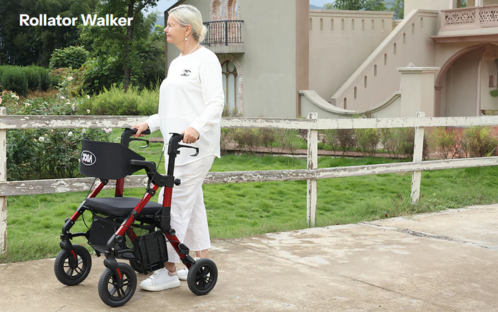
A walking aid, such as a rollator walker, can help when the challenge is not motivation, but stability, endurance, or confidence. For someone who wants to increase daily steps but feels unsteady or tires easily, extra support can make walking more manageable.
The VOCIC Z51 Shift Combo 2 In 1 Rollator - Transport Chair Walker fits that kind of situation well. It combines rollator support with transport-chair functionality, so users can keep walking when they feel able and sit when they need a break. That kind of flexibility can make a daily step goal feel more realistic, especially on days when energy or balance is less consistent.
Conclusion
The right steps per day goal depends on age, but age is only the starting point. For many adults under 60, 8,000 to 10,000 steps is a practical target, while for many adults 60 and older, 6,000 to 8,000 steps can already deliver strong health benefits. The better goal is the one that fits your mobility, current baseline, and ability to stay consistent over time.
FAQ
How many steps should a 50-year-old walk a day?
A practical goal for many 50-year-olds is roughly 7,000 to 10,000 steps a day, depending on baseline activity, health, and schedule. Someone who is mostly sedentary should build up gradually rather than jump to the high end.
How many steps should a 70-year-old walk a day?
For many adults 60 and older, 6,000 to 8,000 steps a day is a realistic and beneficial range. A healthy 70-year-old may choose to go higher, but lower totals can still be meaningful if walking is done consistently and safely.
Is 5,000 steps a day enough for older adults?
It can be a good starting point, and for some older adults it is already a solid result. Mayo Clinic specifically notes that 5,000 steps may be very good for an 85-year-old, depending on the individual.
Is 10,000 steps a day still the best goal?
Not as a universal rule. It is one possible goal, not the goal. The best target depends on age, baseline activity, mobility, and how sustainable the routine is.
What is a good daily step goal if you have limited mobility?
Start with your current average and aim for small increases. A few hundred to 1,000 extra steps over time may be more realistic than chasing a big round number. If balance or endurance is a limiting factor, a supportive walking aid may help make that increase safer and more consistent.



Share:
Best Gentle Exercise for Older Adults at Home
Types of Canes: How to Choose the Right Walking Cane