
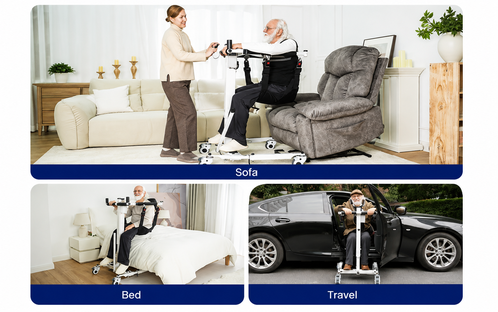
Elderly getting in and out of car seats can become difficult when reduced leg strength, joint pain, poor balance, or limited flexibility makes bending and turning uncomfortable. The safest technique depends on whether the person can stand, bear weight, pivot, and control their upper body.
For someone who can still stand, the usual method is to sit on the seat first and then move both legs into the vehicle. A person who cannot stand or pivot safely may need professional assessment and mechanical assistance. Never assume that lifting harder is the solution.
Assess the Older Adult’s Mobility Before the Transfer
To help an elderly person get in and out of a car safely, park on a level surface, create enough space around the seat, and let the person sit before bringing both legs inside. Reverse that sequence when exiting. However, the right method depends on the person’s strength, balance, weight-bearing ability, and capacity to follow directions.
A wide range of transfer aids is available, but the equipment should be selected only after determining how much of the movement the older adult can perform.
|
Mobility level |
Physical ability |
Suitable approach |
Typical assistance |
|
Independent but stiff |
Can stand, turn, and control sitting |
Standard sit-then-turn technique |
Supervision or simple car aid |
|
Needs balance support |
Can bear weight but is unsteady |
Guided standing transfer |
Trained caregiver and appropriate support |
|
Unable to stand safely |
Cannot reliably bear weight or pivot |
Mechanical or seated transfer |
Professional assessment and transfer equipment |
Independent but Stiff or Painful
Some older adults can walk and stand without physical assistance but struggle to bend beneath the door frame or rotate their hips and knees into the footwell. Arthritis, back pain, and reduced flexibility commonly contribute to this problem.
The goal is to reduce twisting and provide a stable handhold. Moving the passenger seat back, reclining it slightly when appropriate, and using a suitable swivel cushion may make the movement easier. A caregiver should allow extra time rather than pulling the person through the doorway.
Able to Stand but Needs Balance Support
This person can bear weight through the legs but may be unstable while stepping backward, turning, or lowering onto the seat. A trained caregiver may provide balance support or use a gait belt when it has been recommended for that individual.
A gait belt is not a lifting strap. It helps the caregiver guide movement and respond to a loss of balance, but it should not be used to carry the person’s weight. Recent abdominal surgery, feeding tubes, rib injuries, or sensitive skin may also make a belt inappropriate.
Unable to Stand or Pivot Safely
A conventional standing transfer is not suitable when the person’s knees buckle, they cannot support their weight, or they cannot remain upright on the edge of the seat. Trying to lift them manually can injure both people.
Depending on the individual and vehicle, safer options may include a transfer board, powered transfer device, rotating vehicle seat, or wheelchair-accessible vehicle. Vehicle dimensions matter just as much as the equipment: a lift cannot complete the transfer if its base will not fit beneath the vehicle or its seat cannot align with the car seat.
Once the appropriate transfer method has been identified, prepare the vehicle before asking the person to stand or move.
Prepare the Car and Transfer Area
A well-prepared transfer area reduces the time an older adult must remain standing and prevents last-minute repositioning.
Park on a Flat, Stable Surface
Park on firm, level ground with enough room to open the passenger door fully. Avoid steep driveways, loose gravel, ice, puddles, and raised curbs. When possible, arrange for the person to enter and exit on the sidewalk side rather than next to moving traffic.
Check the weather and lighting as well. A technique that works in a garage may be less stable on wet pavement or in a dark parking lot.
Create Space Around the Seat
Move the passenger seat back to increase legroom. If the vehicle allows it, a slightly reclined backrest can provide more headroom while the person turns into the cabin. Return the seat to a safe riding position afterward.
Remove bottles, bags, loose floor mats, and anything else that could obstruct the person’s feet. Consider the height of the door sill and the amount of space beneath the roof. A high SUV may require too much of a step, while a low sedan can make standing up difficult.
Position the Wheelchair or Walking Aid
Place the wheelchair or walker close enough to reduce unnecessary steps, but keep it out of the person’s turning path. Apply the wheelchair brakes and move footrests aside before beginning the transfer.
If a wheelchair will travel in the vehicle, finish the person’s transfer before folding or loading it. The correct process for folding a wheelchair for car storage begins with an empty, stable chair and depends on its frame and folding mechanism.
Check How the Person Feels
Ask about pain, weakness, dizziness, shortness of breath, or unusual fatigue. After a long ride, let the person sit upright with both feet outside the car for a moment before standing.
A sudden decline from their usual ability is a reason to pause. An unnecessary trip can be postponed, while an essential transfer may require additional help or a different vehicle.
With the route and destination prepared, use a controlled sit-then-turn sequence to help the person enter the car.

How to Help an Elderly Person Get Into a Car
These steps are intended for someone who can bear weight and participate in the transfer. Follow any movement restrictions provided after hip surgery, joint replacement, stroke, or another medical event.
Step 1: Approach Without Twisting
Guide the person toward the open door until they can turn and place the backs of their legs near the seat. They should take small steps instead of twisting on one planted foot.
Use a stable handhold approved for the vehicle or transfer aid. The car door may move and should not automatically be treated as a support rail. The person should also avoid holding onto the caregiver’s neck, which can pull both people off balance.
Step 2: Sit Before Moving the Legs Inside
Once the person feels the seat behind their legs, they should reach for an appropriate support point, bend at the hips and knees, and lower themselves slowly.
The caregiver can guide the movement but should not lift from beneath the arms. Pulling on the shoulders can be painful, offers poor control, and does little to support the person’s center of mass.
Make sure the hips are securely on the seat before moving the legs. If the person lands too close to the edge, help them reposition while they are still stable rather than beginning the turn immediately.
Step 3: Turn the Body and Legs Into the Car
Encourage the person to keep the knees relatively close together and move the trunk and legs toward the vehicle in a coordinated motion. This reduces the strain created by placing one leg inside while the upper body remains twisted toward the door.
A swivel cushion can reduce friction for someone with adequate sitting balance. Its base must remain stable on the actual car seat, and the added height must not place the person’s head too close to the roof.
If the caregiver needs to assist a leg, support it gently at an appropriate point rather than pulling the ankle. Watch for pain and avoid exceeding prescribed hip or knee movement limits.
Step 4: Reposition and Fasten the Seat Belt
Help the person move their hips toward the back of the seat and place both feet safely in the footwell. Adjust the head restraint and seatback for a comfortable riding position.
Fasten the seat belt in the manner intended by the vehicle, with the lap portion low across the pelvis and the shoulder portion across the chest. Do not place the shoulder belt behind the back or under the arm.
Before closing the door, make sure that clothing, medical tubing, mobility-aid straps, and fingers are clear.
Exiting uses the same basic movements in reverse, but standing from a low car seat may require more leg strength.
How to Help an Elderly Person Get Out of a Car
Prepare everything the person will need before asking them to move. They should not have to remain standing while someone retrieves a walker from the trunk.
Step 1: Position the Mobility Aid
Place the wheelchair, walker, or cane within practical reach without blocking the door opening. Lock a wheelchair before the transfer and move its footrests away from the person’s feet.
Check the landing area for curbs, gravel, water, or uneven pavement. Open the door fully and stand where you can assist without trapping your feet between the door and the person.
Step 2: Turn and Bring Both Legs Outside
After releasing the seat belt, ask the person to move toward the edge of the seat in small increments. They should rotate the upper body and legs toward the door as one controlled movement.
Guide both feet onto a firm surface. If a vehicle step is necessary, it must be stable, appropriately sized, and positioned before the person begins moving.
Pause if the person feels dizzy. Sitting with both feet supported for a short period may be safer than standing immediately after a long journey.
Step 3: Move Forward on the Seat
The person should move forward until both feet can rest flat and support the planned standing motion. Avoid sliding so far that the hips approach the edge before the feet are ready.
The caregiver should watch for knees that begin to buckle or feet that slide forward. If the person cannot maintain this position, do not continue with a manual standing transfer.
Step 4: Lean Forward and Stand
Ask the person to bring their upper body forward so their weight moves over their feet. They can then push from an approved support surface and extend their legs to stand.
Do not pull on their wrists or shoulders. If substantial lifting is required, the selected method does not match the person’s current ability.
Once standing, pause until balance is steady. The person can then take small steps toward the wheelchair or take hold of the walker.
Step 5: Complete the Transfer
When transferring to a wheelchair, have the person turn with small steps until they can feel the chair behind both legs. They should then lower themselves slowly rather than dropping onto the seat.
Confirm that they are fully seated before replacing the footrests or positioning supports. Do not walk away until the person is stable and the transfer is complete.
When a correct technique is still not enough, select an aid that solves the specific problem instead of asking the caregiver to lift harder.
Choose the Right Car Transfer Aid
Car transfer equipment ranges from simple handles to powered lifts. No single option is appropriate for every combination of person and vehicle.

|
Transfer aid |
Best suited for |
Ability required |
Main limitation |
|
Car support handle |
Extra leverage when standing |
Good grip and some leg strength |
Must fit the vehicle securely |
|
Swivel cushion |
Difficulty rotating hips and legs |
Stable sitting balance |
May not work on deep or contoured seats |
|
Transfer board |
Seated lateral transfer |
Upper-body control and training |
Requires compatible surface heights |
|
Gait belt |
Guided standing or pivoting |
Some weight-bearing ability |
Not designed for lifting |
|
Powered transfer lift |
Full assistance |
Depends on device design |
Vehicle compatibility is essential |
Car Door Support Handles
A portable support handle may fit into a compatible door striker and provide a more secure push point than the door itself. Before use, verify that the handle is intended for the vehicle’s striker design and that it locks firmly into place.
This option still requires adequate grip, arm control, and leg strength. It cannot compensate for knees that collapse or an inability to stand.
Swivel Cushions and Transfer Slides
Swivel cushions help the person rotate after sitting, while transfer slides reduce friction when repositioning across the seat. They are most useful for someone who can sit upright but finds twisting painful.
Deep bucket seats, prominent side bolsters, steep seat angles, and slippery upholstery can reduce their effectiveness. Test the aid without rushing and confirm that it does not make the seating position too high for the available headroom.
Transfer Boards and Gait Belts
A transfer board can bridge the space between a wheelchair and car seat for certain people who have good sitting balance and sufficient upper-body control. The two surfaces must be positioned at appropriate heights, and the person and caregiver need training in board placement and movement.
Gait belts support guided standing transfers rather than seated sliding. A physical or occupational therapist can determine which method matches the individual’s strength, movement restrictions, and vehicle.
Powered Transfer Lifts for Full Assistance
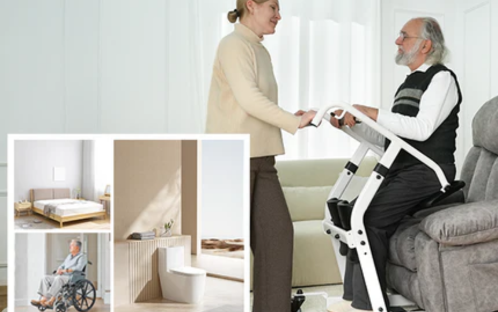
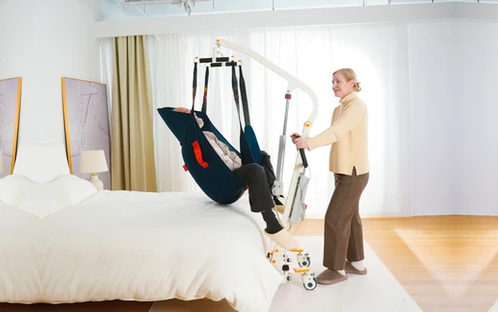
A person who cannot stand or pivot may require powered transfer assistance. The VOCIC AY06 Electric Transfer Lift has a 330-pound capacity, adjustable height, and a foldable design. Its base is intended to slide beneath compatible car chassis so the seat can approach the vehicle more closely.
“Compatible” is the deciding condition. Measure the under-car clearance, door opening, seat height, and space around the vehicle before choosing this solution. The caregiver should also receive training for the equipment and follow its specific operating and braking instructions. The general steps involved in using a lift for a car transfer cannot replace the manual for the exact device.
Mobility Support After the Transfer
Some older adults can enter and exit a car with little help but cannot comfortably walk across a large parking lot or stand throughout an appointment. In this situation, rollator walkers and transport chairs address the next stage of the journey rather than the car-seat transfer itself.
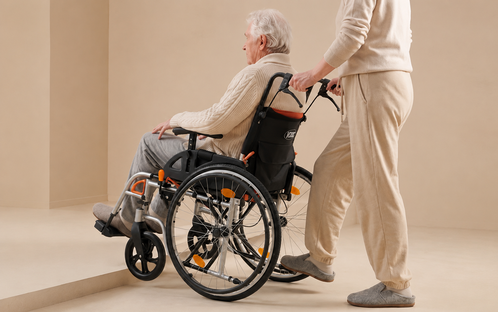
The VOCIC Z55 Transport Chair converts between a rollator and a companion-pushed transport chair and folds for car-trunk storage. That combination may suit someone who wants to walk when able but needs seated transport when fatigue develops. It is not a lifting device for a person who cannot stand.
When a Different Vehicle Is Safer
If a standard car remains difficult despite appropriate aids, changing the vehicle setup may be safer than repeatedly forcing the transfer. Alternatives include rotating vehicle seats, powered transfer seats, and wheelchair-accessible vehicles.
Compare the door width, roof clearance, sill height, seat height, footwell space, and under-car clearance. Someone who struggles with a low sedan may find a moderately higher seat easier, but an excessively high SUV can create a different obstacle.
Travel planning should also consider the entire outing. Realistic travel tips for senior citizens include allowing rest time, reducing unnecessary walking, preparing medications, and confirming accessibility before departure.
The best aid is therefore the one that matches both the person’s current ability and the specific vehicle—not simply the device that provides the most assistance.
Final Thoughts
Safe car transfers begin with an honest assessment of what the older adult can do. If the person can bear weight, the usual approach is to prepare the vehicle, sit first, rotate the trunk and legs together, and reverse the movement when getting out. Simple handles or swivel cushions may help when balance or stiffness is the main limitation.
If the person cannot stand or pivot, the caregiver should not attempt to compensate by lifting more of their weight. A mechanical transfer solution or wheelchair-accessible vehicle may be necessary.
Families can explore broader home-care and mobility options throughVOCIC, but equipment should always be matched to the user, vehicle, and care plan. After a fall, operation, stroke, or significant mobility change, ask a physical therapist, occupational therapist, or driving rehabilitation specialist to reassess the transfer method.
FAQ
What Is the Easiest Car for an Elderly Person to Get In and Out Of?
The easiest vehicle usually has a seat close to the person’s hip height, a wide door opening, a relatively low sill, and enough roof clearance. Very low cars can make standing difficult, while tall SUVs may require an unsafe step. The best fit depends on the person’s height, flexibility, and leg strength.
Why Is It So Hard for an Elderly Person to Get Out of a Car?
Common reasons include reduced leg strength, painful knees or hips, poor balance, limited trunk rotation, and a low or deeply contoured seat. Difficulty that appears suddenly or becomes significantly worse may indicate a health change and should be discussed with a healthcare professional.
Is a Swivel Cushion Safe for Every Car Seat?
No. A swivel cushion may be unstable on a steep, deeply contoured, narrow, or slippery seat. It also raises the sitting height, which can reduce headroom. Check the cushion’s instructions, vehicle fit, and the person’s sitting balance before relying on it.
When Should a Caregiver Avoid a Manual Car Transfer?
Stop when the person cannot bear weight, their knees buckle, they cannot remain seated upright, or the caregiver must carry most of their weight. Severe pain, dizziness, confusion, or a suspected injury are also reasons not to proceed with a routine manual transfer.
Can a Patient Lift Be Used With Any Car?
No. A lift must be compatible with the vehicle’s door width, seat position, roof height, surrounding space, and under-car clearance. The ground must also be stable enough for the equipment. Measure the vehicle and confirm compatibility before purchasing or attempting the transfer.
Share:
How to Use a Patient Lift Safely: A Step-by-Step Guide
How to Plan and Pay for Long-Term Care Without Stress