
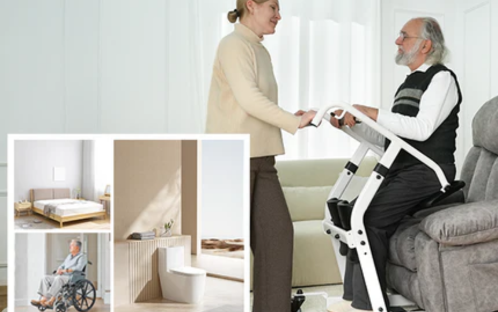
Knowing how to transfer an elderly person from bed to toilet safely requires more than physical strength. Before moving, assess whether the person can sit upright, bear weight, stand, turn, and follow instructions. Then choose a transfer method that matches those abilities. Never attempt to manually lift someone who cannot support their own weight.
Choose the Safest Bed-to-Toilet Transfer Method
The safest method depends on the person’s current mobility, not what they could do yesterday. Illness, medication, pain, fatigue, or dizziness can quickly change the level of assistance they need.
|
Mobility level |
Suitable method |
Typical equipment |
|
Can stand, balance, and walk |
Assisted walking |
Prescribed walker or cane |
|
Can bear some weight but cannot walk safely |
Stand-pivot transfer |
Gait belt, wheelchair, or sit-to-stand device |
|
Has good sitting balance but cannot stand |
Seated transfer |
Transfer board and compatible surfaces |
|
Cannot bear weight or sit safely |
Full-body mechanical transfer |
Patient lift and compatible sling |
Different transfer aids support different levels of mobility. Before choosing one, check whether the person can:
- Sit at the edge of the bed without falling sideways
- Place both feet securely on the floor
- Bear weight through at least one leg
- Push up from the bed
- Remain standing long enough to turn
- Follow short instructions
- Tell you about pain, fear, or dizziness
If any of these abilities are uncertain, do not begin a manual transfer until a physical therapist, occupational therapist, nurse, or other qualified professional has assessed the situation.
Once you know which method is appropriate, prepare the entire route before helping the person out of bed.
Prepare the Bed, Route, and Toilet Before Moving
Set up the environment so you do not have to leave the person unsupported midway through the transfer.
Start by explaining where you are going and how the movement will happen. Ask about pain, dizziness, shortness of breath, weakness, or recent falls. Check the care plan for weight-bearing restrictions, joint precautions, a weaker side, medical tubing, or required equipment.
Then prepare the route:
- Turn on enough lighting, especially during nighttime trips.
- Remove rugs, cords, furniture, and other obstacles.
- Dry any wet bathroom flooring.
- Place nonslip footwear on the person.
- Adjust the bed so their feet can rest flat when sitting at the edge.
- Position the wheelchair, commode, or lift before they stand.
- Keep clothing and hygiene supplies within reach.
A regular bathroom may not be the safest destination if the route is long, the doorway is narrow, or the person needs to toilet urgently at night. The VOCIC YR11 Drop Arm Bedside Commode Chair can shorten the distance by placing the toileting surface near the bed. It can also be positioned over an existing toilet as a raised seat and safety frame. Its drop-arm design may improve side access, but the chair must be stable and correctly positioned before a transfer begins.
Other bathroom safety equipment, including toilet supports and suitable seating, may reduce the depth of the sit-to-stand movement. However, equipment should not crowd the caregiver’s standing space or block the person’s feet.
With the destination prepared, you can begin the transfer only if the person still demonstrates the expected level of participation.

Transfer an Elderly Person From Bed to Toilet Step by Step
The following steps describe a stand-pivot or assisted-standing transfer. Use them only when the person can sit upright, bear weight, follow instructions, and remain standing long enough to turn.
Step 1: Help the Person Sit at the Edge of the Bed
Help the person roll onto their side if their care plan permits it. Move their legs toward the edge while supporting the upper body into a sitting position.
Let them sit for a moment before standing. Ask whether they feel dizzy or lightheaded, and watch for leaning, unusual breathing, confusion, or loss of balance. Both feet should rest flat on the floor.
Step 2: Position the Feet and Caregiver
Ask the person to move their feet slightly behind their knees if comfortable. This position can make it easier to bring their center of gravity forward.
Stand close with your feet apart and one foot slightly ahead of the other. Bend at your hips and knees while keeping your back in a comfortable neutral position.
Never lift by pulling on the person’s wrists, arms, armpits, or clothing. They should not wrap their arms around your neck. These grips can injure the person’s shoulders and leave you unable to control a loss of balance.
Step 3: Apply a Gait Belt When Appropriate
A gait belt can give the caregiver a controlled handhold when the person can bear weight and actively participate. It is not designed to lift someone who is fully dependent.
Do not place a gait belt over an abdominal incision, feeding tube, ostomy, injured ribs, or fragile skin unless a qualified professional has approved its use. Ask for hands-on instruction if you are unsure about its placement or grip.
Step 4: Assist the Person to Stand
Ask the person to move their upper body forward, bringing their nose over their toes. They should push from the bed or a stable armrest instead of pulling on a walker.
Agree on a count, then rise together. Use your legs to change height rather than pulling upward with your arms. Keep the person close and watch for knee buckling.
When someone can partially bear weight but needs structured support, the VOCIC Sit-to-Stand Lift Assist may help with short transfers between compatible seated surfaces. It supports up to 400 pounds and uses padded multi-point support, dual-lock braking, and a split seat. The person must still have sufficient leg strength, trunk control, and ability to follow directions. It is not suitable for someone who cannot participate in standing.
Step 5: Pivot or Move Toward the Toilet
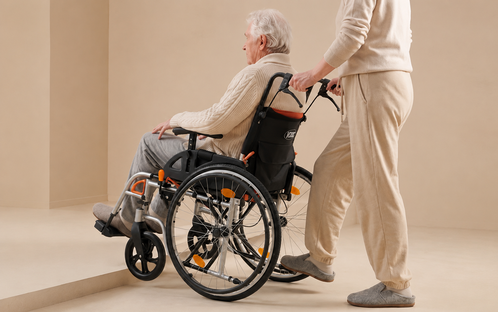
If using a wheelchair or bedside commode, position it close to the bed, usually toward the person’s stronger side unless their care plan specifies otherwise. Lock the wheelchair and move the footrests out of the way.
Once standing, turn with small steps. The caregiver should move their feet with the person instead of twisting at the waist. Back up until the person can feel the toilet, commode, or chair against the backs of their legs.
If the person is walking to the bathroom, use only their prescribed mobility device. Stay in the position demonstrated during training and do not rush to cover the distance.
Step 6: Manage Clothing and Lower the Person
Clothing management often makes a toilet transfer harder than a bed-to-chair transfer. Arrange garments so they can be lowered without requiring the person to stand unsupported for a long time.
Ask the person to reach for a secure grab bar or armrest when appropriate. Once they feel the seat behind their legs, help them bend at the hips and knees and lower themselves slowly. Confirm that their hips are centered and both feet are supported before releasing your hold.
The same preparation principles used in a safe bed-to-wheelchair transfer also apply here, but toileting adds clothing, hygiene, privacy, and bathroom-space considerations.
Reaching the toilet completes only half the task. The return transfer may be more difficult because the person is tired and the toilet is often lower than the bed.
Help With Toileting and the Return Transfer
Protect privacy while maintaining safety. Keep supplies nearby and allow the person to complete as much personal care as they can manage without leaning too far or losing balance.
Before helping them stand, reassess their condition. Ask about dizziness, pain, numbness, and fatigue. Make sure clothing will not restrict their feet or create a tripping hazard.
A fixed grab bar or stable toilet armrest may help the person push upward. Do not let them pull on a walker because it can tip toward them. If standing from a low toilet is consistently difficult, a professionally selected raised seat or powered toilet seat may reduce the required movement. The seat must fit the toilet, support the user’s weight, and leave their feet adequately supported.
Repeat the same coordinated stand and pivot used on the way to the toilet. When returning to bed, back the person up until they feel the mattress behind their legs, then lower them under control. Help their legs onto the bed without twisting their joints or dragging their skin.
Finish by positioning the person comfortably and placing the call device, water, mobility aid, and other essentials within reach.
If the person can no longer stand safely for the return trip, do not force the original method. Move to a more supportive transfer plan.

Use a Mechanical Lift When Standing Is Not Safe
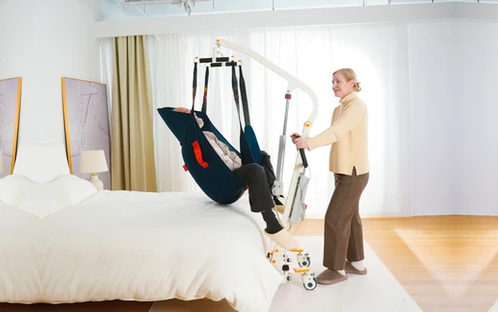
A full-body mechanical lift is generally more appropriate when the person cannot bear weight, has poor sitting balance, cannot follow directions, or becomes unpredictable during standing.
Mechanical toileting transfers require a compatible lift and a correctly fitted sling. A toileting sling may provide access for clothing and hygiene, but its more open design can provide less body support than a full-body sling. It is not appropriate for every person.
Before lifting:
- Confirm the lift and sling weight limits separately.
- Inspect the sling, loops, hooks, frame, controls, and battery.
- Position the sling exactly as its instructions describe.
- Check that clothing, skin, and medical tubing are not trapped.
- Prepare the toilet or commode before raising the person.
- Follow the required caregiver count in the care plan and equipment manual.
Raise the person only an inch or two at first. Stop and check every connection, their body position, and their comfort. Continue only if the low trial lift is stable.
The VOCIC AY02 Upgrade Foldable Electric Patient Lift provides full-body lifting support for people who cannot safely complete a standing transfer. It has a 440-pound capacity, a base adjustable from 24 to 34 inches, and manual emergency lowering. Caregivers must still verify that the base fits around the destination and that the sling is suitable for the individual and the toileting task.
Procedures for casters, brakes, sling loops, and emergency controls vary by model. Learning how to use a patient lift safely requires hands-on training as well as careful review of the exact lift and sling manuals.
Regardless of the method, caregivers must be prepared to stop when the person or equipment no longer behaves as expected.
Stop the Transfer When Warning Signs Appear
Stop immediately if the person develops sudden pain, dizziness, shortness of breath, confusion, knee buckling, or loss of balance. Also stop if a wheelchair, commode, sling, or lift shifts unexpectedly.
If a fall begins, do not twist or jerk upward to hold the person’s full weight. If you have received appropriate training, guide them toward the closest safe surface or floor while protecting their head.
After a fall, check for bleeding, severe pain, confusion, deformity, or possible injury to the head, neck, spine, or hips. Seek emergency assistance when an injury is suspected or the person cannot be assessed safely.
A failed transfer is a signal to reassess the person’s condition, the destination, the equipment, and the number of caregivers required. It is not a reason to repeat the movement with more force.
Final Thoughts
The correct way to transfer an elderly person from bed to toilet depends on what they can safely do at that moment. Assisted walking may work for someone with stable mobility, while a stand-pivot device can support partial weight-bearing. A bedside commode may be safer when the route is difficult, and a full-body lift is usually the appropriate option when the person cannot bear weight. VOCIC offers equipment for different transfer needs, but product selection should always follow an individualized assessment, hands-on training, and the instructions for the exact device.
FAQ
Can One Caregiver Transfer an Elderly Person to the Toilet?
Sometimes, but the decision depends on the person’s mobility, size, cognition, medical condition, care plan, equipment instructions, and applicable facility policy. A second trained caregiver may be necessary even when powered equipment is used.
When Should You Use a Bedside Commode?
A bedside commode may be appropriate when the bathroom is too far away, nighttime mobility is poor, urgency makes the trip unsafe, or the doorway cannot accommodate the required equipment. The person must still be transferred onto and off the commode using an appropriate method.
Is a Gait Belt Safe for a Bed-to-Toilet Transfer?
It can be safe for someone who can bear weight and participate. It should not be used to lift a fully dependent person or placed over vulnerable abdominal areas, tubes, painful ribs, recent surgical sites, or fragile skin without professional approval.
What Toilet Height Is Best for an Elderly Person?
The person should be able to sit with adequate foot support and stand without an excessively deep squat. The appropriate height depends on their leg length, joint mobility, strength, and transfer method. A seat that is too high can leave the feet unsupported.
What Should You Do If the Person Becomes Weak Mid-Transfer?
Stop moving toward the toilet and guide them to the nearest safe surface if you can do so using your training. Do not try to carry their full weight. Assess them for symptoms or injury and call for additional or emergency help when necessary.
Share:
Transfer Techniques for Caregivers: A Safe Step-by-Step Guide