
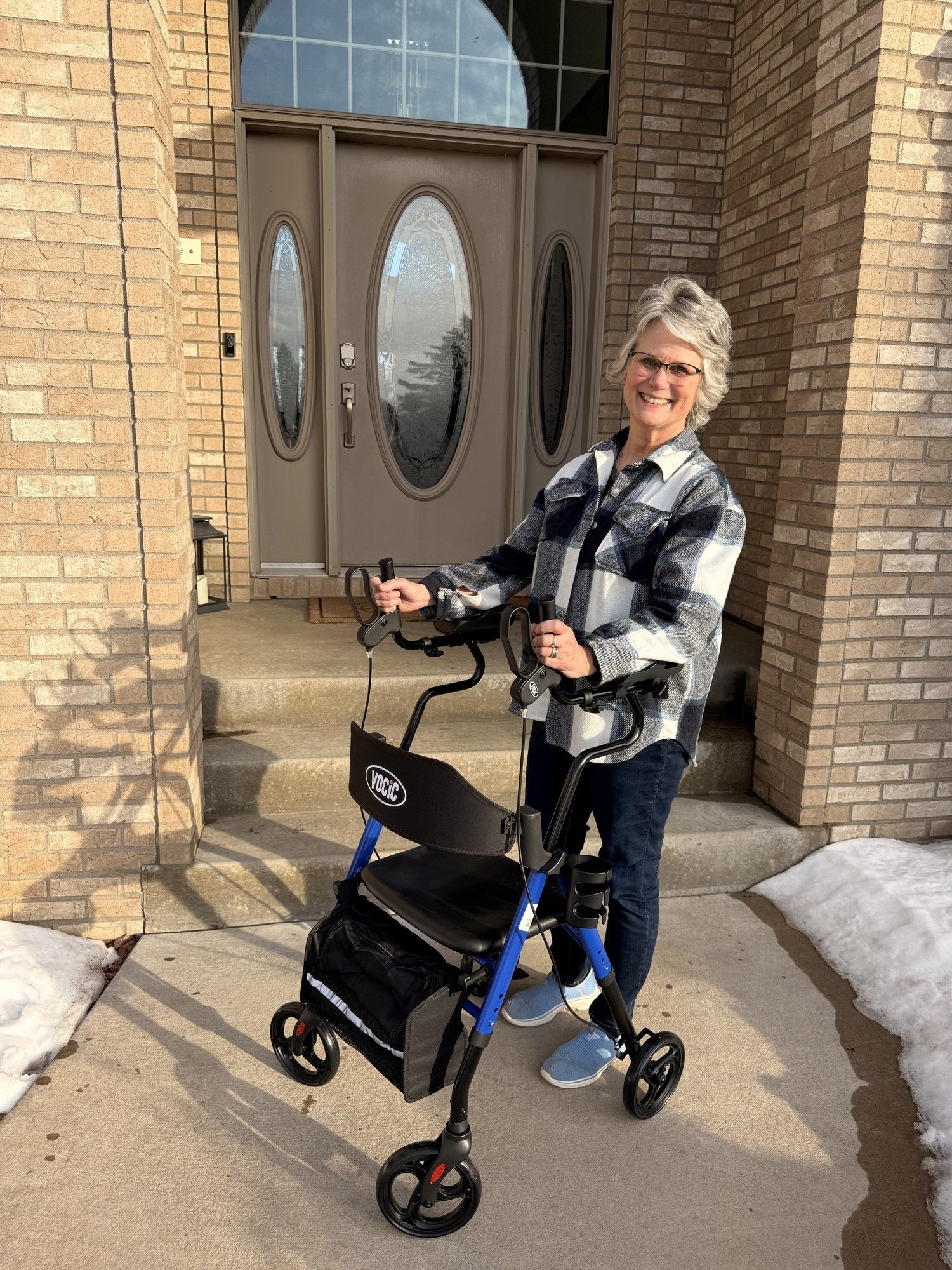
Upright walkers (also known as forearm or platform walkers) are valuable mobility devices because they promote functional movement, postural alignment, and participation in meaningful daily activities while reducing physical strain and reducing the risk for falls. Compared to the standard walkers that encourage forward flexion and downward gaze, upright walkers allow the user to maintain a more neutral spine and elevated visual field, which directly supports both physical performance and occupational engagement.

One of the primary benefits of upright walkers is improved posture and trunk alignment. By supporting the forearms rather than requiring weight bearing through the hands, these walkers reduce excessive spinal flexion and encourage an upright thoracic and cervical posture. This alignment enhances balance reactions, promotes symmetrical weight distribution, and decreases compensatory patterns that often lead to pain or fatigue. For individuals with kyphosis, chronic back pain, or postural instability, upright walkers provide an external support that facilitates safer and more efficient ambulation.
Upright walkers also significantly impact endurance and energy conservation. When posture is improved and upper extremity strain is reduced, clients are able to ambulate longer distances with less effort. This is particularly important for individuals with cardiopulmonary limitations, neurological conditions, or generalized deconditioning. From an OT perspective, improved endurance directly translates to greater independence with functional mobility needed for activities of daily living (ADLs) and instrumental activities of daily living (IADLs), such as accessing the bathroom, navigating the kitchen, or participating in community tasks like shopping or attending appointments.

Another key benefit is enhanced visual scanning and environmental awareness. Traditional walkers often cause clients to look downward while ambulating, increasing the risk of missing obstacles or uneven surfaces. Upright walkers allow for a forward-facing head position, improving visual input, spatial orientation, and hazard detection. This supports safer navigation in complex environments and aligns with occupational therapy’s emphasis on environmental interaction and fall prevention.
Upright walkers also promote functional use of the upper extremities. By offloading weight from the wrists and hands and redistributing it through the forearms, individuals with arthritis, weakness, non weight bearing precautions, or pain in the hands can ambulate more comfortably. This can preserve hand function for self-care tasks such as grooming, feeding, and dressing. Additionally, many upright walkers are equipped with seats or storage options, allowing users to rest as needed and carry personal items, which supports independence and task completion throughout the day.
Psychosocially, upright walkers contribute to increased confidence and participation. Standing taller and walking with greater stability can positively impact self-image and reduce fear of falling. This increased confidence often leads to greater willingness to engage in therapy, socialize, and participate in meaningful occupations. Occupational therapy prioritizes not only physical function but also quality of life, and upright walkers serve as a tool that bridges both domains.

In summary, upright walkers support improved posture, balance, endurance, visual awareness, and upper extremity function while enhancing safety and participation in daily life. From an occupational therapy perspective, their value lies not merely in facilitating ambulation, but in enabling individuals to move through their environments with greater independence, dignity, and engagement in meaningful occupations.
Share:
The Z63 VOCIC Rollator: An Occupational Therapist’s Perspective on Restoring Independence and Reducing Risk of Falls
VOCIC Welcomes Occupational Therapist Reagan Lamont as Product Officer