
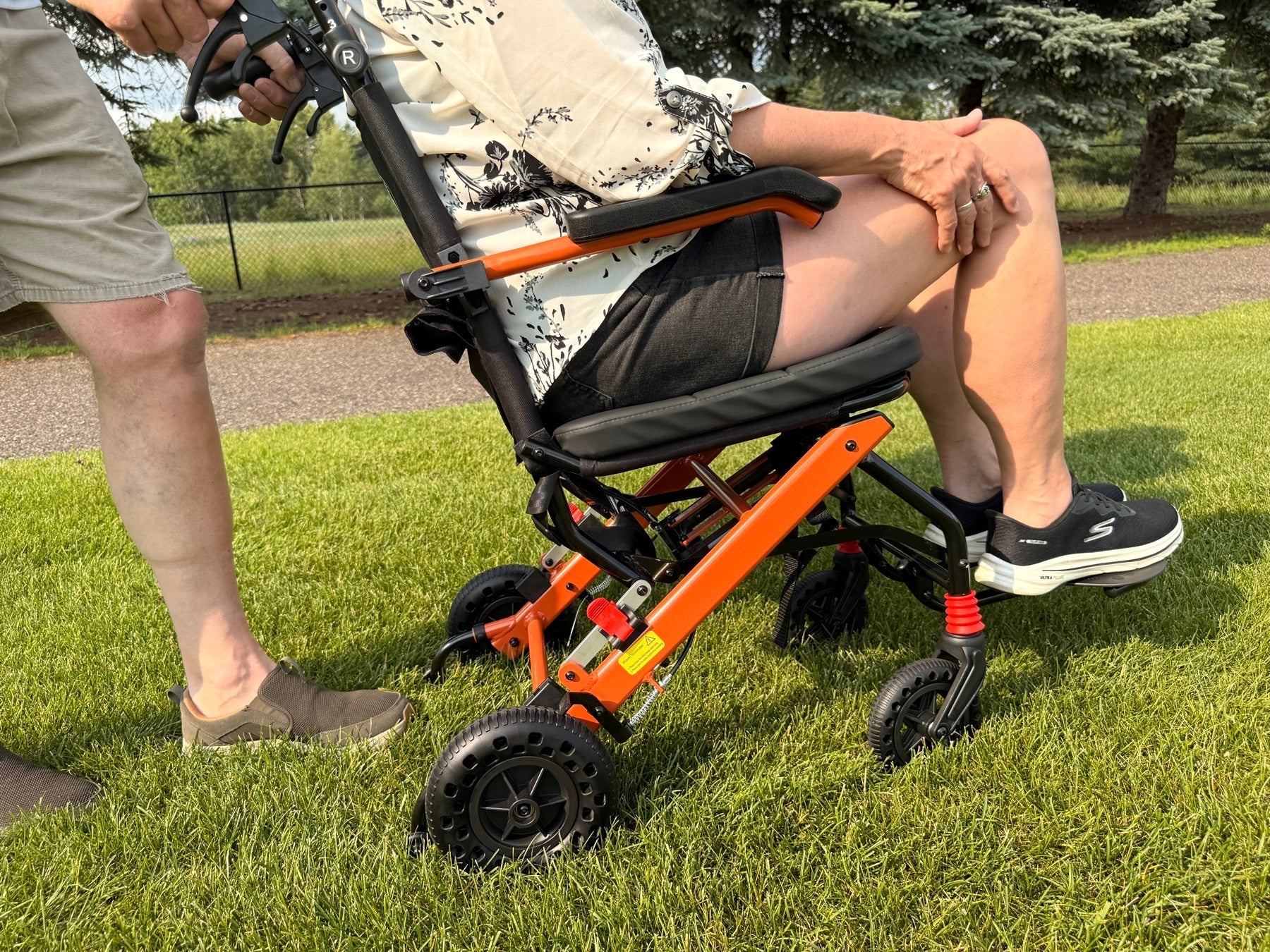
As an occupational therapist, our goal is always to help individuals participate in the activities that matter most to them while maximizing safety, independence, and quality of life. One piece of equipment that can make a significant difference for many individuals with limited mobility is the U42 Portable Transfer Wheelchair.
Unlike traditional wheelchairs that are often bulky and difficult to transport, the U42 was designed with portability and convenience in mind. Its lightweight folding frame allows caregivers and family members to easily load it into a vehicle, making it an excellent option for medical appointments, travel, vacations, shopping trips, or community outings. When mobility becomes easier, participation in meaningful activities often increases as well.

From a clinical perspective, I appreciate that the U42 encourages safe mobility while reducing the physical demands placed on caregivers. Transferring someone from one location to another can be physically taxing, and having a dependable transfer wheelchair helps minimize unnecessary lifting and awkward positioning. This not only promotes better body mechanics for caregivers but also reduces the risk of injury for both the caregiver and the individual being assisted.

Comfort and safety are equally important considerations. The U42 features comfortable seating, secure armrests, footrests, and reliable brakes that help provide stability during transfers. These features support proper positioning while helping users feel secure throughout transportation.
Another benefit I often discuss with patients is the wheelchair's maneuverability. Its compact design makes it easier to navigate narrow hallways, crowded waiting rooms, restaurants, and other community environments where larger mobility devices may be more difficult to manage. This allows users to remain engaged in social activities and maintain greater participation in everyday life.
It's important to remember that a transfer wheelchair is designed to be pushed by a caregiver rather than self-propelled. For individuals who fatigue easily, have decreased endurance, are recovering from surgery, or require assistance with longer distances, this type of mobility device can be an excellent solution. It helps conserve energy while still allowing individuals to safely access their environments.
Ultimately, the right mobility equipment should remove barriers rather than create them. The U42 Portable Transfer Wheelchair offers a practical combination of portability, comfort, safety, and convenience that supports both users and caregivers. From an occupational therapy perspective, anything that promotes participation, reduces caregiver burden, and helps individuals remain active in their communities is a valuable tool for improving overall quality of life.
Share:
Assistive Devices for Alzheimer’s Disease: An Occupational Therapist’s Guide to Safety and Independence
Everyday Movement Is the Best Medicine: How Mobility Supports Healthy Aging