
Learning how to transfer from wheelchair to car seat safely begins with choosing a method that matches the person’s actual mobility. Someone who can bear weight briefly may use a stand-pivot transfer. A person who cannot stand but has good sitting balance may use a transfer board. When the user cannot participate safely, a mechanical lift or wheelchair-accessible vehicle may be more appropriate.
These are general guidelines, not a substitute for hands-on training. An occupational therapist, physical therapist, or other qualified professiona CHAIRl should assess the user’s strength, balance, pain, and vehicle before a new transfer method is attempted.
What Is the Best Way to Transfer from a Wheelchair to a Car?
The best method depends on whether the person can bear weight, maintain sitting balance, use their upper body, and follow instructions. The safest option minimizes the distance between the two seats without requiring the user or caregiver to lift, twist, or reach beyond a stable base of support.
|
Transfer method |
Usually suitable for |
Assistance needed |
Main limitationPATIENT |
|
Stand-pivot transfer |
A person who can bear some weight and control their trunk |
Supervision or trained caregiver support |
Unsafe if the legs buckle or pivoting is difficult |
|
Transfer-board method |
A person who cannot stand but has sitting balance and upper-body control |
Setup assistance or guided movement |
Difficult with a large gap or major height difference |
|
Mechanical transfer |
A person who cannot participate safely in a manual transfer |
Trained caregiver and compatible equipment |
Requires space, setup, and vehicle compatibility |
|
Wheelchair-accessible vehicle |
A person who must remain seated in the wheelchair |
Ramp or lift and approved securement system |
Requires an adapted vehicle |
Choosing among manual techniques and wheelchair transfer devices should begin with the person’s weight-bearing ability, trunk control, upper-body strength, and level of caregiver support.
A diagnosis alone does not determine the right method. Two people with the same condition may have different pain levels, joint movement, skin sensitivity, balance, or fatigue. The safest technique can also change over time, so a transfer that worked six months ago may need to be reassessed.
Once the method has been selected, prepare the car and wheelchair before asking the person to move.
Prepare the Wheelchair and Car Before the Transfer
Park the vehicle on firm, level ground and apply the parking brake. Choose a location with enough room to open the passenger door fully and allow the caregiver to stand without stepping into traffic.
Move the car seat back to create legroom. A slight adjustment to the backrest may create more space, but the seat must remain suitable for normal seat-belt use. Remove bottles, bags, floor mats, and other items that could interfere with the person’s feet.
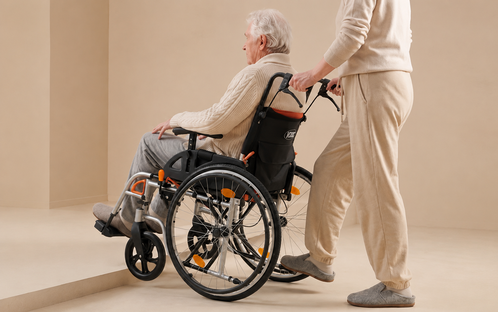
Position the wheelchair close to the car seat. A stand-pivot transfer often works with the wheelchair at an angle of approximately 30 to 45 degrees. A transfer-board method may require a more parallel position. In either case, the goal is to reduce the distance between the seats while leaving enough space for controlled movement.
Lock both wheelchair brakes. Swing the footrests away or remove them, then move the armrest nearest the car if the design allows it. Different wheelchairs use fixed, removable, flip-back, or swing-away components, so confirm how they operate before positioning the chair.
The person’s feet should be on stable ground, not on the footplates. Before beginning, explain the movement and agree on a cue such as “ready, set, stand.” Clear communication helps the user and caregiver move together instead of pulling in opposite directions.
With the area prepared, a person who can safely support some weight may be ready for a stand-pivot transfer.
How to Perform a Stand-Pivot Transfer into a Car Seat
A stand-pivot transfer is intended for someone who can bear enough weight to rise and make a controlled turn. If the person’s knees buckle, they become dizzy, or they cannot maintain their balance, stop and use a different method.

Move Forward to the Edge of the Wheelchair
Ask the person to move forward in small steps until their feet are firmly planted. They should not be dragged toward the edge by their arms, clothing, or shoulders.
If a caregiver uses a gait belt, it should be applied and handled according to professional training. A belt can provide a secure point of guidance, but it does not make an otherwise unsafe transfer appropriate.
Use Stable Hand Positions
The person may place one hand on a fixed wheelchair armrest and the other on the car seat or an approved vehicle grab handle. Do not rely on the car door because it can move unexpectedly. The window, dashboard trim, and loose interior handles may also be unsuitable for supporting body weight.
The caregiver should stand close enough to guide the movement without bending at the waist or reaching across the user.
Lean Forward and Stand on a Shared Cue
Ask the person to lean forward so their shoulders move over their feet. On the agreed cue, they should push from the wheelchair armrest and rise to a controlled standing or semi-standing position.
The caregiver should guide rather than pull. Lifting under the arms can injure the shoulders and gives poor control if the person’s legs suddenly weaken.
Pivot by Moving the Feet
Turn toward the car seat with small steps. The user and caregiver should move their feet instead of planting them and twisting through the knees, hips, or lower back.
Continue until the person can feel the car seat behind their legs. Lower them slowly, keeping their head clear of the door frame.
Bring the Legs into the Vehicle
Make sure the person is stable on the car seat before moving their legs. Bring one leg into the footwell at a time and reposition the hips only as needed. Avoid pulling the arms or rotating the trunk sharply.
When standing is not safe, a transfer board or mechanical device may reduce the need for lifting.
How to Use a Transfer Board or Mechanical Lift
A transfer board creates a bridge between the wheelchair and car seat. It may help someone who cannot stand but can maintain sitting balance and use their arms to move sideways.
Position the two seats as close together as possible and reduce the height difference where the vehicle design permits. Place one end of the board securely beneath the user and the other on a stable area of the car seat. A deep door sill, large gap, steep angle, or unstable seat surface can make the method unsafe.
The user should move across in several small, controlled shifts. Leaning slightly forward may reduce pressure and make lateral movement easier, but the person must remain balanced. The caregiver can steady the torso and board without dragging the user by their clothing or skin.
Transfer boards are not appropriate for everyone. Limited arm strength, poor sitting balance, fragile skin, severe pain, or an inability to follow instructions may require another solution.
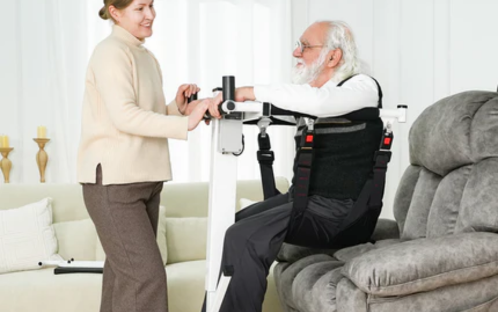
Safe sling placement, vehicle clearance, and caregiver training are all essential when using a Hoyer lift for car transfers. The equipment must fit around or beneath the vehicle, reach the seat safely, and lower the person without striking the door frame.
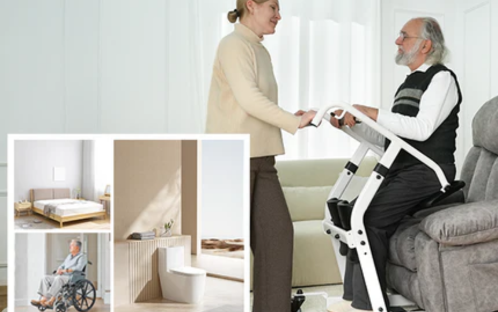
For someone who cannot complete a safe stand-pivot or sliding-board transfer, the VOCIC AY06 Electric Transfer Lift may reduce manual lifting. Its adjustable height and car-transfer base are intended to help align the user with a compatible vehicle seat. Vehicle clearance, user weight, sling suitability, and caregiver training must all be confirmed before use.
After the person reaches the car seat, complete the remaining safety steps before handling the wheelchair.
Complete the Transfer and Avoid Common Mistakes
Make sure the user’s hips and back are supported by the car seat. Help reposition their legs without pulling the arms or twisting the spine. Once they are stable, fasten the vehicle’s original seat belt correctly across the shoulder and pelvis. A wheelchair positioning belt is not a substitute for a vehicle seat belt.
Only load the wheelchair after the passenger is secure. Remove loose cushions, bags, footrests, or other detachable parts before folding or disassembling the chair. Lift it from solid frame sections rather than removable armrests or footplates.
The safest method for transporting an electric wheelchair in a car depends on its total weight, folded dimensions, battery configuration, and the vehicle’s cargo space. A heavy power chair may require a ramp, hoist, carrier, or adapted vehicle rather than manual lifting.
When leaving the vehicle, prepare the wheelchair before beginning the reverse transfer. Open it fully, lock both brakes, move the footrests out of the way, and bring it close to the car seat.
Common mistakes include leaving too much space between the seats, forgetting a wheelchair brake, allowing the person to hold the moving car door, and twisting while the feet remain planted. Rushing can also cause the user and caregiver to move before both are ready.
Stop immediately if the person develops pain, dizziness, shortness of breath, fear, or sudden weakness. A recent fall, surgery, fracture, skin injury, or change in mobility is a reason to seek a new professional assessment instead of continuing with the old method.
Conclusion
The best way to transfer from a wheelchair to a car is the method that matches the person’s current strength and balance while minimizing the distance between surfaces. A stand-pivot transfer may work for someone who can bear weight and turn safely. A transfer board may be more appropriate when standing is not possible but sitting balance and upper-body control remain adequate. Mechanical assistance or an accessible vehicle should be considered when manual movement places too much weight on the caregiver.
VOCIC develops mobility and transfer solutions for different support needs, but equipment should always be selected around the user’s abilities, vehicle compatibility, and professional recommendations.
FAQ
Can one person transfer someone from a wheelchair to a car?
Sometimes, but it depends on the user’s ability to participate, the caregiver’s training, and the transfer method. If one person must lift most of the user’s body weight, manual transfer may not be safe.
Can you use a transfer board to get into a car?
Yes, when the person has adequate sitting balance and upper-body control and the board can be positioned securely. A large seat-height difference, deep door sill, or wide gap may make a transfer board unsuitable.
Should a caregiver lift someone under the arms?
No. Pulling under the arms can injure the person’s shoulders and gives the caregiver poor control over the user’s center of gravity. Use professionally taught hand positions or suitable transfer equipment.
Is an SUV or a sedan easier for wheelchair transfers?
Neither is always easier. A high SUV may require too much lifting, while a low sedan may require excessive lowering and make it difficult to stand afterward. A seat height close to the wheelchair seat is generally easier to manage.
When is a wheelchair-accessible vehicle a better option?
Consider an accessible vehicle when transfers repeatedly require multiple caregivers, create a high fall risk, or cannot be completed without substantial lifting. A person who must remain seated in a wheelchair also needs an appropriate ramp or lift and an approved wheelchair securement and occupant-restraint system.

Share:
How to Fold a Wheelchair Safely: Manual and Electric Wheelchair Guide
How to Use a Patient Lift Safely: A Step-by-Step Guide