
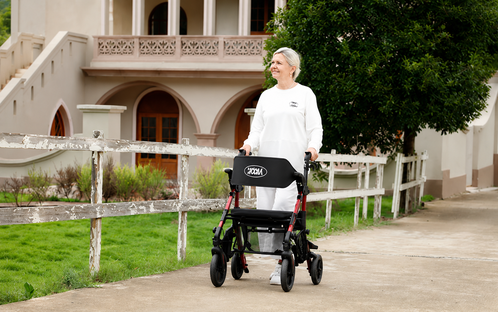
Balance, leg strength, foot control, and fatigue can change throughout the day for people with MS, making it difficult to rely on one level of walking support. The best walkers for MS patients should match the user’s gait, brake control, posture, walking surface, and need for seated rest, with the final choice guided by a physical or occupational therapist.
What Makes a Walker Suitable for Someone With MS?
MS affects mobility differently from person to person. Some users need steady support for short indoor steps, while others need a rolling walker that conserves energy during errands and provides a seat when fatigue increases.
When comparing walkers for MS or the best walking aids for balance, focus on features that improve stability, reduce fatigue, and make daily movement easier:
- Stable support for balance changes
- A seat for fatigue and rest breaks
- Brakes the user can operate reliably
- Proper handgrip or forearm support
- Wheels suited to the main walking surface
- Manageable weight and folded size
A physical therapist or occupational therapist should help assess gait, balance, foot drop, grip strength, transfers, turning, and daily fatigue before a mobility aid is chosen. Symptoms can change, so a walker that worked well six months ago may need adjustment or replacement later.
Best Walkers for MS Patients to Consider
The five options below address different MS-related mobility needs, including changing endurance, upright forearm support, outdoor surfaces, controlled step-by-step movement, and easier lifting. Product fit still needs to be checked for the individual user.
Quick Picks
|
Product |
Walker Type |
Seat |
Brakes |
Main Use |
Weight Capacity |
Best For |
|
VOCIC Z51 Shift Combo |
Rollator and transport chair combo |
Yes |
Hand and parking brakes |
Daily outings with changing endurance |
300 lb |
Users who may need caregiver-pushed transport later |
|
VOCIC Z22 Upright Walker |
Upright rollator |
Yes |
Dual-action hand and parking brakes |
Forearm-supported indoor and outdoor walking |
300 lb |
Users seeking a more upright support position |
|
VOCIC Z57 Outdoor Rollator |
All-terrain rollator |
Yes |
Dual brakes |
Parks, uneven sidewalks, and outdoor routes |
300 lb |
Users who need larger wheels outside |
|
Drive Medical Deluxe Folding Walker |
Standard folding walker |
No |
No hand brakes |
Slow, controlled indoor steps |
350 lb |
Users who need steady step-by-step support |
|
byACRE Carbon Ultralight |
Lightweight rollator |
Yes |
Hand and parking brakes |
Daily errands, travel, and smoother routes |
285 lb |
Users or caregivers prioritizing low carry weight |
Best for Changing Energy Levels: VOCIC Z51 Shift Combo
The VOCIC Z51 Shift Combo suits people who can begin an outing walking but may lose endurance before they return home. It works as a rollator for independent walking, then converts into a caregiver-pushed transport chair by repositioning the backrest and footrests.
This flexibility can help during medical appointments, shopping trips, parks, or family outings where distance and fatigue are difficult to predict. Its 10-inch front wheels support paved outdoor movement, while the one-hand fold makes it easier to place in a car.
Key details:
- Rollator and transport chair modes
- 300 lb capacity
- Reversible backrest and fold-down footrests
- 10-inch front wheels
- Puncture-proof tires
- Folding frame and seat belt
Best for: people with changing endurance who travel with a caregiver able to push in transport chair mode.
Best Upright Support: VOCIC Z22 Upright Walker
The VOCIC Z22 Upright Walker supports the forearms rather than placing all pressure through conventional handgrips. This setup may feel more comfortable for users who struggle to keep a regular rollator close or who experience hand, wrist, shoulder, or posture discomfort.
Its adjustable armrests should be fitted so the shoulders stay relaxed and the user can remain close to the frame. The built-in seat supports rest breaks, while 8-inch wheels allow use across indoor floors, sidewalks, and maintained outdoor paths.
Key details:
- Adjustable forearm support
- Gel-padded armrests
- 300 lb capacity
- 8-inch wheels
- Built-in seat and backrest
- Folding reinforced frame
Best for: users who benefit from forearm support and can reliably steer and operate the brakes.
Best for Outdoor Stability: VOCIC Z57 Outdoor Rollator Walker
The VOCIC Z57 Outdoor Rollator Walker is designed for users whose normal routes include cracked sidewalks, parks, grass edges, or other maintained outdoor surfaces. Its 12-inch front and 10-inch rear wheels pass over small surface changes more easily than compact indoor wheels.
The seat gives users a planned place to rest before fatigue affects gait control. Larger wheels add bulk, however, so users should confirm that they can steer the frame, manage the brakes, and load it into a vehicle when needed.
Key details:
- 12-inch front and 10-inch rear wheels
- Dual braking system
- 300 lb capacity
- Widened seat
- Adjustable handles
- Folding outdoor frame
Best for: people with MS who walk outdoors regularly and need larger wheels plus seated rest breaks.

Best for Controlled Step-by-Step Support: Drive Medical Deluxe Folding Walker
The Drive Medical Deluxe Folding Walker offers a slower and more controlled alternative to a four-wheel rollator. Each side folds independently, and the frame stays in place until the user deliberately advances it.
At only 5.5 lb, it is also easy for many caregivers to lift and store. It has no seat or hand brakes, so it fits users who need stable short-distance support rather than continuous rolling or frequent seated rest.
Key details:
- Standard two-button folding frame
- 5.5 lb product weight
- 350 lb capacity
- Independent side operation
- 20-inch overall width
- No seat or hand brakes
Best for: users who need deliberate step-by-step support for home movement, transfers, or short controlled routes.
Best Premium Lightweight Rollator: byACRE Carbon Ultralight
The byACRE Carbon Ultralight weighs 10.6 lb, making it much easier to lift into a car, carry up steps, or manage during travel than most full-size rollators. Its forward-facing handles also allow the frame to stay closer to the body, which may reduce unnecessary reaching.
The soft puncture-proof wheels suit indoor floors, sidewalks, stores, airports, and smoother outdoor paths. Its seat provides a place for short rest breaks, but the relatively high seat and light frame should be checked carefully for user fit and stability.
Key details:
- 10.6 lb carbon-fiber frame
- 285 lb capacity
- Folding width of 9.8 inches
- Built-in seat
- Soft puncture-proof wheels
- Three size options
Best for: users and caregivers who prioritize low lifting weight, compact transport, and everyday urban mobility.
How Do Different Walker Types Fit Different MS Needs?
Each walker type changes how the user moves, turns, rests, and manages fatigue. For users comparing a rollator vs standard walker, the amount of support needed should guide the category before individual products are compared.
Standard and Front-Wheeled Walkers
Standard walkers provide the most controlled pace because the frame must be lifted or advanced one step at a time. Front-wheeled models reduce lifting effort but still offer more resistance than a rollator.
They may suit people with significant balance changes who can use their arms for support. The absence of a seat makes them less useful when fatigue requires frequent rest.
Rollators With Seats
A rollator moves continuously on wheels and can reduce the effort of repeatedly lifting a frame. The seat helps users rest before fatigue changes their steps or posture.
The user must have enough balance, coordination, judgment, and hand control to steer and operate the brakes. A fast-rolling frame may provide too little control for someone who needs heavy weight-bearing support.
Upright Walkers
Upright walkers transfer more support through the forearms and can reduce pressure on the hands. They may help users who lean heavily over standard grips, though armrest height and brake reach must be fitted carefully.
Rollator Transport Chair Combos
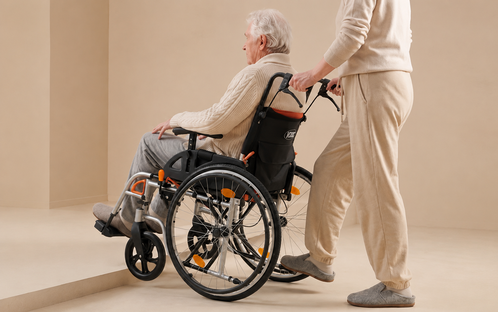
A combo supports walking first and caregiver-pushed transport later. It makes sense when endurance can drop suddenly during longer outings. Transport mode requires a companion and should not be treated as a self-propelled wheelchair.
What Should You Compare Before Choosing a Walker for MS?
Product features become useful only when they match the user’s symptoms, home, routes, and available caregiver support.

Stability and Brake Control
Consider how much weight the user places through the walker and whether they can slow, park, and turn a rollator consistently. Weak grip, tremor, numbness, or slower reactions may affect brake use.
Seat and Fatigue Support
A seat can help users rest before their gait becomes less controlled. Check seat height, width, back support, and whether the brakes can be locked safely before sitting.
Grip, Arm, and Posture Needs
Compare conventional grips with forearm supports. The correct setup should keep the shoulders relaxed, elbows comfortably positioned, and walker close enough to avoid reaching forward.
Weight and Transport
Check who will fold and lift the device. A lightweight rollator may be easier for travel, while a heavier frame can feel steadier for some users. Folded size also matters in cars, closets, and small homes.
Wheels and Walking Surfaces
Small wheels work best on smooth indoor floors. Larger wheels handle sidewalk joints and maintained outdoor routes more easily. Loose gravel, wet grass, steep slopes, and broken ground remain difficult even with an outdoor rollator.
How Can People With MS Use a Walker More Safely?
Safe use depends on fit, pacing, symptom awareness, and regular reassessment. Practice in a controlled setting before relying on a new walker during busy or unfamiliar outings.
Get the Height and Fit Checked
Handles should support a relaxed posture and a slight elbow bend. Upright models need correctly positioned forearm supports. A therapist can also check whether the user stays within the frame during walking and turning.
Plan Around Fatigue
Schedule demanding activities during the part of the day when energy is usually better. Use the seat before exhaustion affects balance, and plan routes with predictable rest points rather than waiting until walking becomes unsafe.
Watch for Foot Drop and Uneven Steps
Foot drop can cause the toes to catch during the swing phase of a step. A walker may improve support, but it does not correct the underlying foot movement. A clinician may assess footwear, an ankle-foot orthosis, functional electrical stimulation, or other treatment options.
Practice Braking and Turning
Practice slowing, locking the brakes, approaching a chair, turning in small spaces, and sitting on level ground. Keep both hands available for the handles rather than carrying loose bags.
Reassess After Symptom Changes
Arrange a new mobility assessment after a relapse, fall, medication change, new weakness, greater fatigue, or reduced hand control. A change in symptoms may require height adjustment, a different walker type, or powered mobility.
Conclusion
Choose a standard walker for controlled step-by-step support, a rollator with a seat for easier continuous movement and fatigue breaks, an upright walker for suitable forearm support, or a combo when caregiver-pushed transport may be needed later in an outing. The final choice should fit the user’s gait, balance, grip, posture, environment, and changing endurance. Comparing suitable mobility aids with regular review from a physical or occupational therapist can help users adjust support as symptoms change.
FAQ
Is a walker or rollator better for someone with MS?
A walker provides slower, more controlled support, while a rollator moves more easily and usually includes a seat. The safer option depends on balance, weight-bearing needs, fatigue, hand control, and the ability to operate brakes.
Can a rollator help reduce fatigue with MS?
A rollator can reduce the effort required to lift a standard frame and provides a seat for planned breaks. Poor fit or pushing the rollator too far ahead can increase effort, so height and walking technique should be checked.
Is an upright walker suitable for people with MS?
It may suit users who benefit from forearm support or experience discomfort with conventional grips. Upright walkers still require safe steering, brake control, and correct armrest adjustment.
Can someone with foot drop use a walker?
Yes, a walker may provide balance support, but foot drop also needs clinical assessment. Treatment may include physiotherapy, an ankle-foot orthosis, functional electrical stimulation, footwear changes, or another approach based on the cause and gait pattern.
When should someone with MS consider a wheelchair instead?
A wheelchair or power mobility device may help when walking remains unsafe or consumes so much energy that daily tasks and meaningful activities become difficult. Frequent falls, severe fatigue, limited distance, or difficulty using a walker should prompt a professional mobility assessment.
Share:
How High Should a Walker Be? Proper Height and Adjustment Guide
Activities to Do with Seniors: Fun Ideas for Every Ability Level