
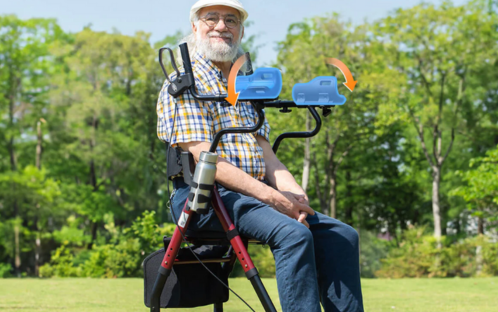
A walker should be high enough to support an upright posture without lifting the shoulders or forcing the user to reach down. As a general starting point, the handles should line up near the wrist crease when the user stands in normal walking shoes with both arms relaxed.
The final setting should feel natural during real steps. Body proportions, footwear, arm length, posture, and walker type can all affect fit, so a height chart based only on the user’s total height may give an inaccurate result.
How High Should a Walker Be?
Walker handles should usually sit near the crease on the inside of the wrist, with the elbows bent slightly about 15 degrees when the user holds the grips.
A properly adjusted walker should allow the user to stand close to the frame and move without shrugging, reaching, or bending forward.
Use these signs as a starting point:
- Handles level with the wrist crease: Let both arms hang naturally, then compare the grips with the inner wrist crease.
- Elbows slightly bent: The arms should feel relaxed rather than locked straight or sharply bent.
- Shoulders relaxed: The user should not need to raise the shoulders to reach the handles.
- Back comfortably upright: The walker should support natural posture without pulling the body forward.
- Both sides adjusted evenly: Matching settings keep the frame level and help it move predictably.
Height charts can help narrow the range, but they cannot account for differences in arm length, posture, shoes, or joint movement. This matters even more when choosing the best walker for short seniors, since handle range and seat height may affect daily comfort. Use the chart as an initial estimate, then confirm the fit while standing and walking.
How to Adjust Walker Height Step by Step
Set up the walker in a quiet area with a flat floor and enough space to take several steps. Ask another person to help if the user has trouble standing without support.
Wear Your Normal Walking Shoes
Adjust the walker while wearing the shoes used most often. Thick soles, slippers, or a change in heel height can alter the relationship between the wrist and the walker handle.
Avoid adjusting it barefoot if the user normally walks in shoes. Even a small height difference can change elbow position and walking posture.
Stand Upright With Your Arms Relaxed
Stand inside the rear of the walker frame rather than several inches behind it. Keep the head up, shoulders relaxed, and arms hanging at the sides.
The top of each grip should line up near the inner wrist crease. When the hands move onto the grips, the elbows should bend slightly without pulling the shoulders upward.
Find the Adjustment Buttons or Knobs
Standard walkers often use spring-loaded buttons in the legs. Rollators may use push buttons, knobs, clamps, or numbered handle settings.
Support the frame before releasing an adjustment point. Move one section at a time and keep fingers clear of holes, sliding tubes, and locking joints.
Set Both Sides to the Same Height
Use matching adjustment holes or number markings on the left and right sides. On a standard walker with four adjustable legs, confirm that all four legs use the corresponding setting unless a clinician has provided different instructions.
After adjustment, place the walker on a flat floor. All wheels or tips should contact the ground evenly without rocking.
Lock the Frame and Test the Fit
Make sure every button has fully popped through its hole and every knob or clamp feels secure. Then hold the grips and take several slow steps.
Check whether the user can:
- Keep the shoulders down
- Maintain a small elbow bend
- Stay close to the walker
- Step inside the frame without kicking it
- Turn without pushing the walker too far ahead
A setting that looks correct while standing may still need a small change after walking.

Does Walker Type Affect the Proper Height?
Yes. Standard walkers and conventional rollators are usually adjusted near wrist level, while upright walkers use forearm or armrest support and require a different fitting process.
Standard and Front-Wheeled Walkers
For a standard or front-wheeled walker, begin with the grips near the wrist crease. The user should be able to place some pressure through the hands without locking the elbows or bending at the waist.
The walker should stay close enough that the user steps into the frame rather than chasing it from behind. If the handles are too low, the person may lean forward. If they are too high, the walker may feel difficult to position and control.
Rollator Walkers
A conventional rollator with handgrips usually follows the same wrist-crease starting point. The user also needs to reach the brake levers comfortably without changing hand position or stretching the fingers. For everyday use, using a rollator walker safely and effectively also means checking brake reach, handle comfort, and control after the height is adjusted.
Upright rollators require more attention to forearm and elbow placement. The VOCIC Z22, for instance, uses adjustable arm support rather than relying only on standard handgrip height. The armrests should support the forearms while the shoulders remain relaxed and the elbows sit comfortably, allowing the user to walk close to the frame. Its adjustment should be tested in motion because arm length and preferred forearm position can change the ideal setting.
How Can You Tell If a Walker Is Too High or Too Low?
Poor height often becomes easier to notice after several steps. Watch the shoulders, elbows, back, wrist pressure, and distance between the user and the frame.
Signs the Walker Is Too High
A walker may be too high when:
- The shoulders rise toward the ears
- The elbows remain sharply bent
- The wrists carry pressure at an awkward angle
- The user has trouble getting close to the frame
- The handles feel high while pushing or turning
- The walker feels difficult to lift or place forward
A high setting can make the upper body tense and reduce control during turns or transfers.
Signs the Walker Is Too Low
A walker may be too low when:
- The user bends at the waist
- The head and chest lean forward
- The shoulders or upper back become tired
- The wrists take too much downward pressure
- The elbows lock straight
- The walker gets pushed too far ahead
Lowering the body toward the frame can also shorten the user’s steps and make it harder to look ahead.
What the Proper Height Should Feel Like
At the proper height, the shoulders stay relaxed, the elbows remain slightly bent, and the body can stay comfortably upright. The user should be able to step within the walker frame and keep the device close without reaching forward.
The grip should feel supportive rather than demanding. After a short walk, the user should not notice new wrist, shoulder, neck, or back discomfort.

When Should You Get Help Adjusting Walker Height?
Some users can adjust a walker safely at home, while others need professional fitting. A physical therapist or occupational therapist can evaluate posture, gait, balance, transfers, and the amount of support placed through the walker.
After Surgery or Injury
Walking patterns often change after hip, knee, foot, back, or upper-body surgery. Temporary weakness, movement restrictions, and pain may affect both walker height and walking technique.
A clinician can also confirm how much weight the user should place through the walker during recovery.
Ongoing Balance or Weakness
Seek help if the user continues to stumble, lean heavily to one side, push the walker too far ahead, or struggle during turns. A height change alone may not solve a gait or balance problem.
Pain While Using the Walker
New wrist, elbow, shoulder, neck, or back pain may indicate poor fit, excessive pressure, weak grip, or an unsuitable walker type. Stop and reassess the setup instead of continuing through the discomfort.
Uneven or Damaged Adjustment Parts
Do not use a walker if a button fails to lock, one leg sits unevenly, a handle slips, or the frame rocks on level ground. Damaged adjustment parts can change height during use and affect stability.
Conclusion
Set walker handles near the wrist crease, keep the elbows slightly bent, and confirm that the shoulders remain relaxed during walking. Adjust both sides evenly, test the walker in normal shoes, and rely on real posture and control rather than a height chart alone. Professional fitting is the safer choice when pain, weakness, balance changes, surgery, or damaged adjustment parts make the correct setup unclear.
FAQ
Should walker handles be level with your hips or wrists?
The wrist crease provides a more practical reference point than the hip. When the arms hang naturally, the grips should sit near the inner wrist crease and allow a slight elbow bend.
Should your elbows be bent when using a walker?
Yes. A comfortable bend of about 15 degrees allows the arms to absorb movement and apply support without locking. A sharp bend may mean the walker is too high, while straight elbows may indicate that it is too low.
Should you wear shoes when adjusting walker height?
Wear the shoes normally used for walking. Sole thickness changes standing height, so adjusting the walker barefoot may create a poor fit once shoes are added.
Do all four walker legs need to be set at the same height?
On a standard walker with four adjustable legs, use matching adjustment positions unless a healthcare professional has prescribed another setup. The frame should sit level without rocking on a flat floor.
Can the wrong walker height cause back or shoulder pain?
Yes. A low walker may encourage bending and upper-back fatigue, while a high walker can raise the shoulders and strain the arms or wrists. Ongoing pain should be assessed by a healthcare professional.
Share:
Best Lightweight Walker Wheelchair Combos in 2026
Best Walkers for MS Patients: Picks for Balance, Fatigue, and Daily Mobility