
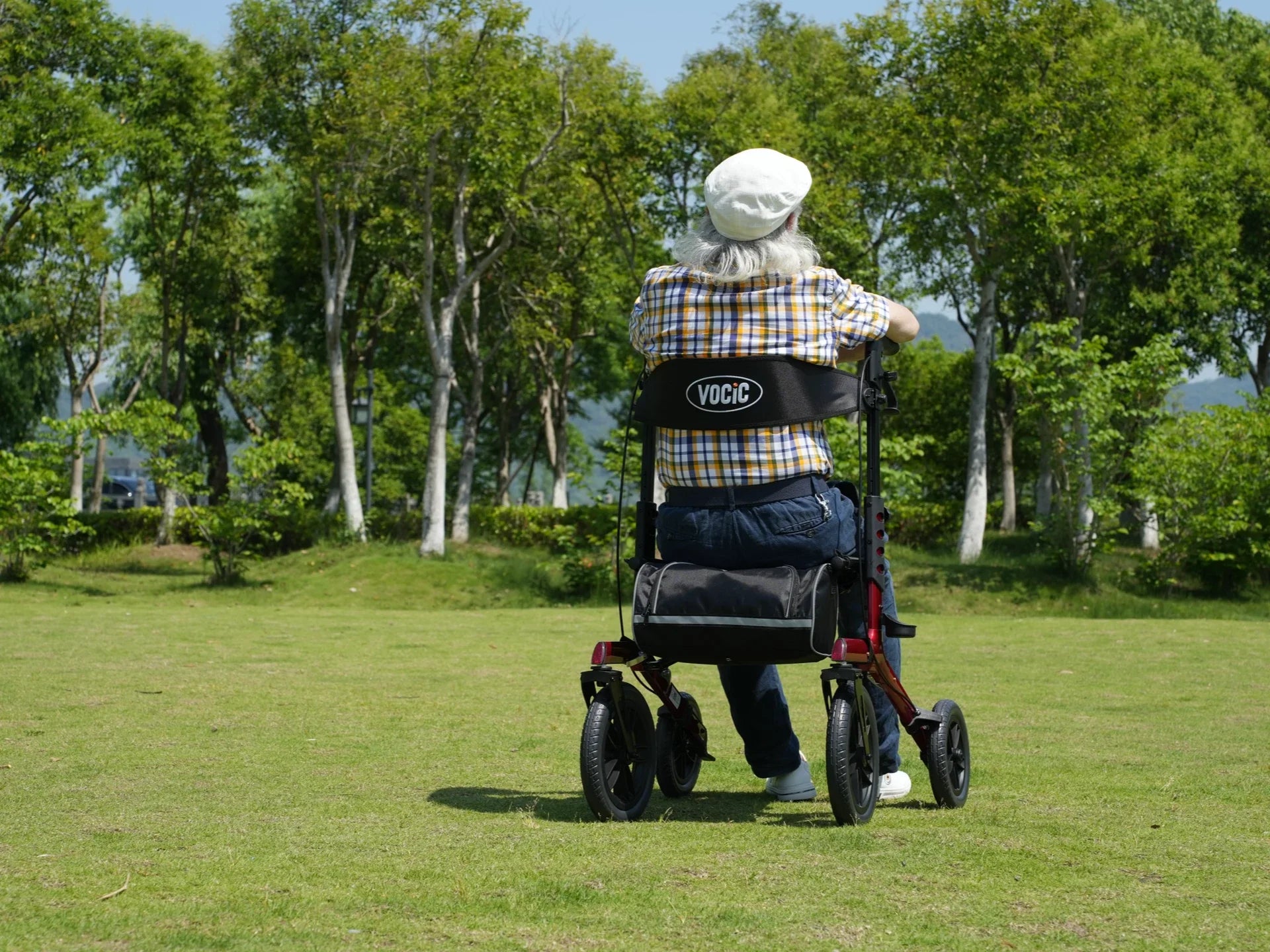
A regular walker can feel steady indoors but find it difficult outside. Sidewalk cracks, grass, gravel, ramps, and park paths can make small wheels catch, shake, or feel harder to control. For seniors who want to keep walking outdoors, the best all-terrain walkers should offer smoother wheels, reliable brakes, a stable frame, and a seat for safe rest breaks without becoming too heavy to transport.
Why Seniors Need a Walker Designed for Outdoor Terrain
Outdoor walking puts more pressure on a walker than indoor use. A walker may roll smoothly indoors but get caught or wobble on cracked sidewalks, grass, or gravel.
- Small wheels can feel unsteady outside: Tiny wheels may catch on sidewalk gaps, door thresholds, or uneven paths.
- Outdoor routes bring more fall risks: Slopes, wet ground, loose gravel, curbs, and grass can make balance harder.
- Rest breaks matter during longer walks: A built-in seat helps seniors pause during park walks, community outings, or errands.
Large wheels can help, but they are only one part of a good outdoor rollator walker. Brakes, frame stability, handle height, seat comfort, and folded size also affect how safe and practical the walker feels outside. The best all-terrain walker should handle rougher surfaces while still being easy enough to transport and store.
Best All-Terrain Walkers for Seniors to Consider
Different outdoor walkers solve different problems. Some focus on big wheels, while others offer lighter frames, higher weight capacity, or a walker-wheelchair combination for longer outings.

Best Overall All-Terrain Walker
The VOCIC Z57 Outdoor Rollator Walker with 12" All Terrain Big Wheels is a strong overall choice for seniors who want outdoor confidence without giving up everyday practicality. Its 12-inch front wheels and 10-inch rear wheels help with sidewalks, grass, park paths, and small obstacles, while the wider anti-slip tread supports better ground contact.
The Z57 also focuses on stability and rest. Its reinforced aluminum frame supports up to 300 lb, and the 18-inch waterproof leather seat gives seniors a place to pause during walks. The handle height adjusts from 36 to 42 inches, so users should compare this range with their usual walking posture before buying.
Key details:
- 12-inch front wheels and 10-inch rear wheels
- 300 lb weight capacity
- 18-inch waterproof leather seat
- Dual brakes
- Adjustable handle height
- Foldable frame for transport
Best for: seniors who want one outdoor rollator for sidewalks, parks, errands, and relaxed neighborhood walks.
Best Walker for Rough Sidewalks and Parks
The byACRE Carbon Overland Rollator is a premium option for seniors who want a smoother outdoor rollator for rougher routes. Its large pneumatic wheels are designed for more challenging terrain, making it a better fit for parks, dirt paths, cobblestones, gravel roads, and uneven sidewalks.
Its biggest advantage is the balance between outdoor capability and low weight. At about 14.8 lb, it is lighter than many rugged outdoor rollators, while still supporting up to 330 lb. This makes it practical for active users who want outdoor performance without a heavy frame.
Key details:
- 14.8 lb frame
- 10.2-inch wheels
- 330 lb max user weight
- Carbon fiber frame
- Outdoor-focused design
- Foldable structure
Best for: seniors who walk outdoors often and want a lightweight premium rollator for rough sidewalks, parks, and mixed outdoor routes.
Best Heavy Duty All Terrain Walker
The VOCIC Z59 2 in 1 Heavy Duty Walker Wheelchair Combo is better for seniors who need stronger support and may sometimes need caregiver assistance. It works as both a rollator walker and a transport chair, which is useful for outings where the user may walk part of the time and need to be pushed later.
Its 400 lb weight capacity, 10-inch high-density PU tires, extra-wide 19-inch seat, and supportive backrest make it a better fit for users who want more room and stronger outdoor support. It is not the lightest option, so it works best when strength and versatility matter more than compact portability.
Key details:
- 2-in-1 rollator and transport chair design
- 400 lb weight capacity
- 10-inch all-terrain tires
- 19-inch extra-wide seat
- Supportive backrest
- High-capacity storage bag
Best for: seniors who need a heavy-duty outdoor walker and may also need short-distance caregiver transport during longer outings.
Best Lightweight Outdoor Walker
The byACRE Nordic Pioneer is a lightweight outdoor walker for seniors who want easier handling in a cleaner, simpler design. At about 13 lb, it is easier to lift, fold, and move than many outdoor rollators, which helps caregivers and users who need something less bulky.
It uses 8.9-inch puncture-proof wheels and a bump-resistant frame, so it can handle everyday outdoor surfaces better than small indoor walkers. The 220 lb weight capacity and higher seat height make it better for lighter users who fit its sizing.
Key details:
- 13 lb weight
- 8.9-inch puncture-proof wheels
- 220 lb max user weight
- Folded width about 10.5 inches
- Handle height around 33 to 37 inches
- Seat height around 24.4 inches
Best for: seniors who want a lighter outdoor rollator for sidewalks, community areas, travel, and easier lifting.
Best Budget-Friendly Outdoor Rollator
The Vive Sunstride All-Terrain Rollator is a practical budget-friendly option for seniors who want larger wheels and outdoor support without moving into a premium price range. Its 12-inch front wheels and 10-inch rear wheels help with gravel, grass, dirt, pavement, and uneven paths.
At 21 lb, it is heavier than lightweight models, but the aluminum frame supports up to 300 lb and folds for trunk storage. The padded seat and backrest also make it useful for seniors who need rest breaks during walks, errands, or outdoor activities.
Key details:
- 12-inch front wheels and 10-inch rear wheels
- 300 lb weight capacity
- 21 lb product weight
- 23-inch seat height
- Folded size: 15 x 13 x 35 inches
- Padded seat and backrest
Best for: seniors who want a more affordable all terrain walker for outdoor surfaces and do not mind a heavier frame.
What Features Matter Most for Outdoor Use?
Outdoor walkers should be chosen by terrain, body fit, and handling, not wheel size alone.

Large Wheels for Uneven Ground
Large wheels help a walker roll over sidewalk cracks, grass, gravel, dirt paths, and small obstacles with less catching. For outdoor use, 8-inch wheels are often a minimum starting point, while 10 to 12-inch wheels can feel better on rougher routes.
Strong Brakes for Slopes and Stops
Outdoor walking often includes ramps, driveways, and uneven stops. Brakes should feel easy to squeeze and strong enough to lock before sitting. Seniors with arthritis or weak grip strength should test brake comfort carefully.
Stable Frame and Weight Capacity
A stable frame reduces wobbling on uneven ground. Weight capacity should match the user, but frame width and balance matter too. A stronger walker can feel safer outdoors, while an oversized frame may feel harder to steer indoors.
Seat and Backrest for Rest Breaks
A seat helps seniors rest during longer walks, but it should only be used on flat, stable ground. Seat height, seat width, and backrest support affect how easy it is to sit and stand again.
Foldability for Car Storage
Outdoor walkers often need to fit in a car trunk for parks, appointments, family outings, or shopping. Check folded size and weight before buying, especially if a caregiver will lift it often.
Handle Height and Walking Posture
The handle height should let the user walk upright with relaxed shoulders and slightly bent elbows. Handles that sit too high or too low can cause strain and reduce control.
Safety Tips for Using an All-Terrain Walker Outdoors
An all-terrain walker can support outdoor mobility, but using a rollator walker safely and effectively is still important on outdoor surfaces.
- Test the brakes before each walk: Make sure the brakes slow and lock properly before leaving home.
- Avoid wet grass, loose gravel, and steep slopes: Even large wheels can slip or sink on unsafe surfaces.
- Sit only on flat, stable ground: Lock the brakes fully before resting on the seat.
- Keep both hands on the handles: Hanging bags or leaning to one side can affect balance.
- Plan shorter routes with rest points: Choose paths with benches, shade, restrooms, and easy return options.
Who Should Choose an All-Terrain Walker?
An all-terrain walker works best for seniors who want more confidence outside but can still safely control a rollator.
Seniors Who Walk Outdoors Often
Seniors who walk around neighborhoods, parks, campuses, shopping centers, or community areas may benefit from larger wheels and stronger outdoor handling.
Users Who Need Frequent Rest Breaks
A rollator with a seat helps users who can walk but tire during longer outings. It gives them a planned place to rest instead of waiting for a bench.
Caregivers Planning Park or Community Outings
Caregivers may prefer all-terrain rollators when outings involve parking lots, outdoor paths, grass edges, or uneven sidewalks. Foldability and weight matter if the rollator walker must be loaded into a car.
Users Who May Need a Different Mobility Aid
An all-terrain rollator is not the right choice for everyone. Seniors with serious balance problems, poor brake control, or very limited walking ability may need to compare the best walking aids for balance, such as a standard walker, wheelchair, mobility scooter, or professional mobility assessment.
Conclusion
The best all-terrain walker for seniors depends on where the user walks, how much support they need, and whether the walker must be lifted into a car. Choose larger wheels for uneven paths, strong brakes for slopes and stops, a stable frame for confidence, and a seat for planned rest breaks. For outdoor walking, the right walker should make movement feel steadier without becoming too heavy or difficult to transport.
FAQ
Are all-terrain walkers safe for seniors?
All-terrain walkers can be safe for seniors who can control the brakes, steer the frame, and walk with a rollator. They are not ideal for users who need maximum weight-bearing support or cannot manage wheels safely.
What wheel size is best for an outdoor walker?
For outdoor use, 8-inch wheels can work on smoother sidewalks, while 10 to 12-inch wheels are better for rougher paths, grass, gravel, and pavement cracks. Wheel size should still be balanced with frame weight and control.
Can an all-terrain walker be used indoors?
Yes, but larger outdoor walkers may feel wider or bulkier indoors. Check the walker width, turning space, and whether it fits through doorways before using it as a main indoor walker.
Is a 3-wheel or 4-wheel walker better for outdoor use?
A 4-wheel rollator is usually better for outdoor use because it offers more stability and often includes a seat. A 3-wheel walker may turn more easily, but it usually offers less seating support and may feel less stable on uneven ground.
Can you use an all-terrain walker on grass or gravel?
Some all-terrain walkers can handle grass or gravel, especially models with larger wheels. Use caution on loose, wet, steep, or uneven surfaces, and avoid sitting unless the walker is on flat, stable ground with the brakes locked.
Share:
Rollator vs Standard Walker: What's the Difference?
Balance Problems in Seniors: Causes, Warning Signs, and Ways to Prevent Falls