
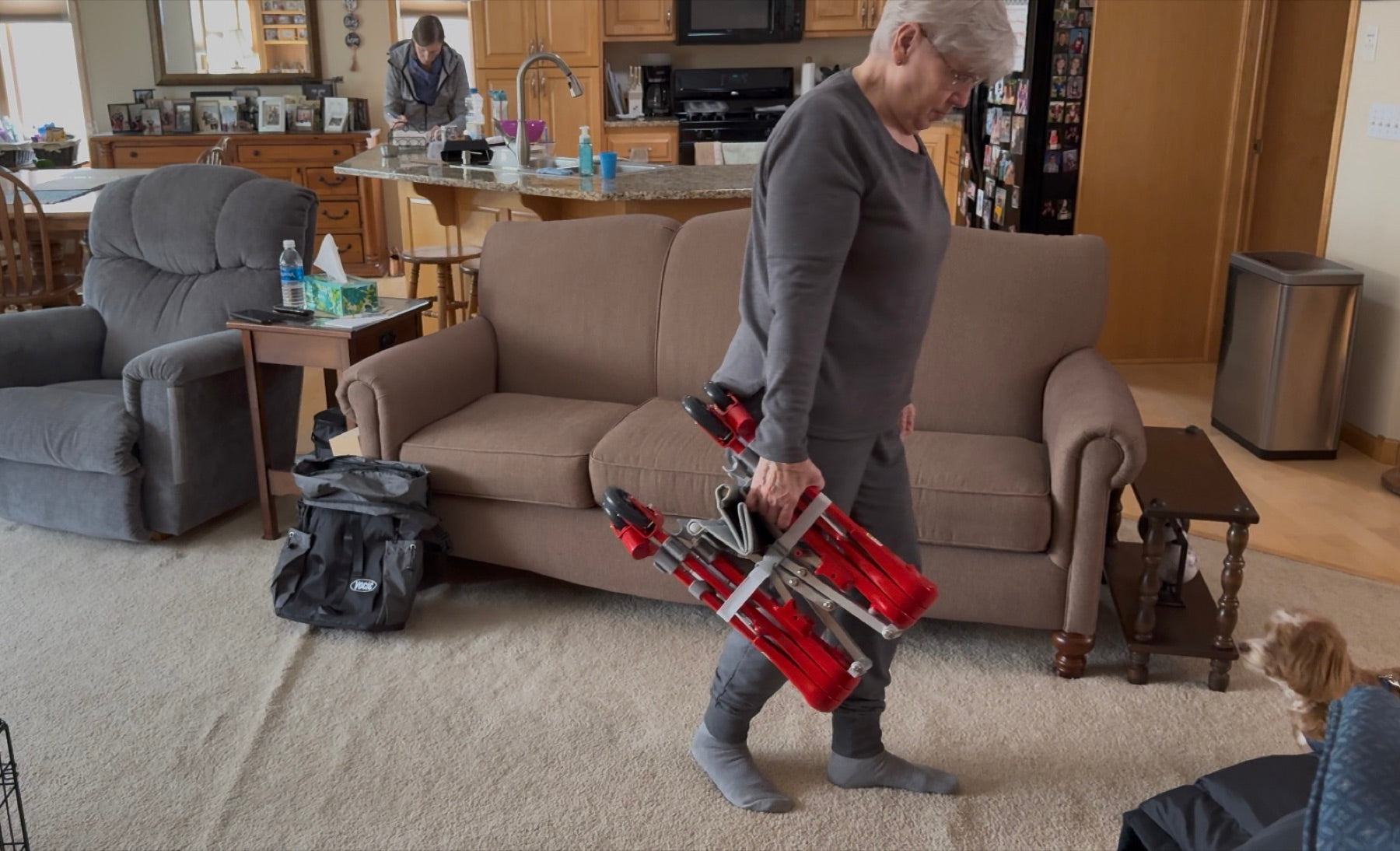
Mobility aids play a vital role in helping individuals maintain independence, safety, and participation in daily activities. As occupational therapists, we frequently help clients select walkers or rollators that match their functional needs, strength, balance, cognition, and lifestyle. Choosing the right device can improve confidence with mobility, reduce fall risk, and support meaningful engagement in everyday life. Below is an overview of common walker and rollator types and which users they are typically best suited for, with examples from VOCIC Medical rollator walkers.
1. Standard Walkers: Maximum Stability for Early Mobility Support
Standard walkers (without wheels) provide the highest level of stability because the user lifts the frame and places it forward with each step. These are often recommended for individuals recovering from surgery or those with significant balance deficits. They allow users to bear weight through their arms and reduce the load on their lower extremities. However, they require adequate upper-body strength and coordination to lift and advance the walker. For many patients, standard walkers are a short-term solution during early rehabilitation before transitioning to a rolling walker or rollator.
2. Two-Wheel Walkers: Stability With Slightly Easier Mobility
Two-wheel walkers add wheels to the front legs while the back legs remain stationary. This design allows the walker to glide slightly forward without needing to be lifted completely. They are often appropriate for individuals who still need significant stability but have enough mobility to manage a smoother walking pattern. In clinical settings, these walkers are commonly prescribed after orthopedic surgery or during the early stages of mobility recovery.
3. Four-Wheel Rollators: Independence for Active Users
Rollators are four-wheel walkers equipped with hand brakes, a seat, and often a storage bag. They are ideal for individuals who have moderate balance challenges but can walk independently with support. The wheels allow continuous movement without lifting the device, making walking more energy-efficient.
For example, models like the VOCIC Z21 Lightweight 4‑Wheel Rollator Walker are designed with lightweight aluminum frames, adjustable handles, and seats for resting during longer walks. These features allow users to remain active in the community while having a safe place to sit when fatigued.

Rollators are particularly helpful for older adults who enjoy community outings, shopping, or longer walks but need occasional support and rest.
4. Upright Rollators: Improved Posture and Reduced Strain
Upright rollators position the handles higher so users can rest their forearms rather than leaning forward. This design promotes a more upright posture and reduces strain on the wrists, shoulders, and back during extended walking.
An example is the VOCIC Z22 Upright Rollator Walker, which features padded armrests and adjustable handle heights to support ergonomic walking. Upright rollators are often beneficial for individuals with chronic back pain, arthritis, or those who tend to lean heavily onto traditional rollators.

5. Rollators: Flexibility for Caregivers and Users
Some rollators convert into transport chairs, allowing caregivers to assist when fatigue or longer distances become challenging. The VOCIC Z51 2‑in‑1 Rollator Transport Chair is an example of this versatile design, featuring a reversible backrest and detachable footrests to switch between walking support and seated transport.
The VOCIC Z35 PackGo Rollator is another versatile design, with its ultra compact backpack size design makes it incredibly easy for users or caregivers to transport and take on the go.
These models are particularly helpful for individuals with fluctuating endurance or progressive conditions where walking ability varies day to day.

Final Thoughts
Selecting the right walker or rollator should always be individualized. Occupational therapists consider factors such as balance, endurance, upper-extremity strength, environment, and lifestyle goals. When matched appropriately, mobility aids like VOCIC rollators can support not only safe ambulation but also independence, confidence, and meaningful participation in daily life.
Share:
Enhancing Mobility and Independence: An Occupational Therapist’s Perspective on the VOCIC Z21 Rollator
Z35 - Bridging the Gap Between Safety and Travel via Rollator