
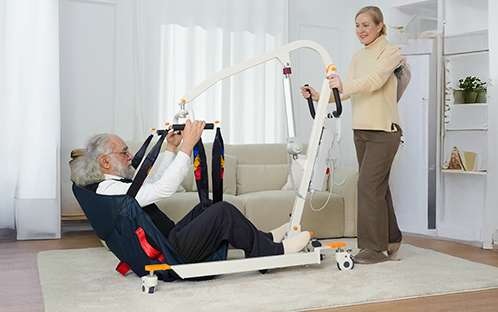
If you have ever found yourself nervously trying to help a loved one move from bed to wheelchair or from chair to shower, then you know: lifting isn’t just hard - it can even be dangerous – not only for your loved one, but actually for the two of you.
That’s where the Hoyer Lift is incredibly helpful.
What is a Hoyer lift?
The question of: What is a Hoyer Lift? Can be answered in simple terms: it’s a mechanical device for lifting used to move people who have limited mobility. Whether due to age, injury, illness, or disability, some individuals can’t safely shift from one position to another on their own - and lifting them manually is risky and can result in injury.
The Hoyer Lift was designed to reduce that very risk. Most models use a sling and a sturdy frame - along with manual or electric lifting power - to safely and comfortably transfer someone from one place to another. One example of this is Vocic’s AY02 Hoyer lift. Think of it as your extra pair of super-strong arms that never get tired.
Manual vs. electric Hoyer lift
There are two main types: manual and electric Hoyer Lift models. The manual version works with a hydraulic pump that you operate by hand. It’s reliable, budget-friendly, and doesn’t require a power source.
The electric Hoyer Lift, on the other hand, does most of the work for you. Take Vocic’s AY06 Lift, for example: With just the press of a button, it lifts and lowers smoothly and steadily. If you are caring for someone regularly - or lifting heavier individuals - the electric version is a true back-saver.
How to use a Hoyer lift: Step-by-step
The beauty of a Hoyer Lift is that it’s designed for safety and simplicity. Here's how to use a Hoyer Lift correctly:
- Prepare the space correctly: Make sure the area is free of any obstacles in the way, and that the floor is dry and flat.
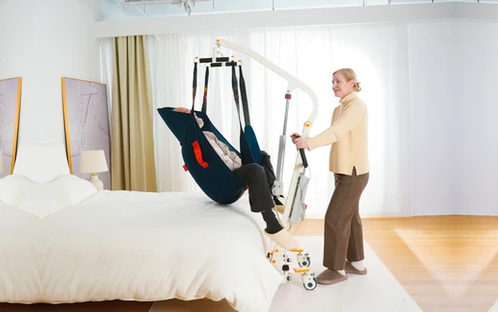
- Position the sling in the right way: Gently roll the person to be lifted onto their side and carefully place the sling beneath them. Centre it so the straps will support both the upper body and legs.
- Attach the sling to the lift: Connect the sling’s loops to the lift’s hooks or spreader bar. Make sure the loops are even and secure.
- Begin the lifting process: Whether using a manual or electric Hoyer Lift, begin raising the person slowly and steadily. It’s a good idea to talk to them throughout - it helps them feel secure and included.
- Transfer carefully: Once elevated, roll the lift to the new location (e.g. a wheelchair, bed, or toilet). Lower them gently into position, making sure they are seated safely and securely before disconnecting the sling.
Bonus tip: Practice a few dry runs with pillows before attempting the real deal. Confidence makes a world of difference.
Why it all matters
Using a Hoyer Lift is more than just convenience - it’s about protecting your loved one’s dignity and your own well-being. Improper lifting can lead to injuries, stress, and even long-term mobility issues for caregivers.
By learning how to use a Hoyer Lift properly, you are not just making things easier - you’re making them safer and more humane.
Whether you are choosing a manual version or going for the smooth power of an electric Hoyer Lift, you're investing in peace of mind - for everybody involved.
And with VOCIC, that peace of mind comes with quality you can count on.
Share:
The freedom to lift: A portable hoyer lift for home use is a must-have
VOCIC Partners with Onslow County to Enhance Community Paramedic Program with AX05 Floor Lift