
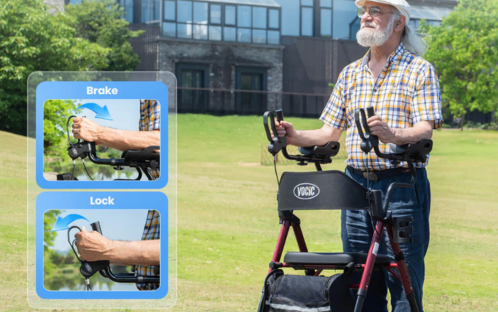
Our mobility can change because of aging, injuries, and many other health conditions. Under those unfortunate circumstances, people use mobility aids for safety. Among all the mobility aid options, most people prefer upright walkers due to the support they provide for posture, comfort, and control.
We have made this guide for you in order for you to understand more about upright walkers. We have also added a list of the best upright walkers available in this article, in hopes of helping you to select the right upright rollator walker to use in everyday life. So without further fanfare, let’s get started.
What Are Upright Walkers?
Upright walkers are assist aids that help in maintaining a natural standing position. Their difference from ordinary walkers lies in the fact that they have armrests rather than hand grips and instead of having the user sitting down, it lets the user stand up. The forearms of users are supported on pads. The design prevents bending of the spine or any kind of shaky movement that might lead to falling down.
An upright walker is also a kind of rollator walker. These walkers also come with four wheels, brakes, and a seat to transform it into a wheelchair. Many people call them upright rollators. The modern walkers are efficient in both indoor and outdoor environments. Besides, they usually have storage bags, backrests, and height adjustment features.
Who Should Use an Upright Walker?
Seniors experiencing balance issues, back pain; and people recovering from surgeries can benefit most from upright walkers. Unlike traditional walkers that force you to hunch forward, these keep your spine aligned while moving. The design of walkers for seniors allow for less strain on healing joints, wrists and hands. If short walks make you tire easily or you feel unsteady moving on uneven surfaces, an upright walker provides stability as you maintain good posture.
Individuals with Parkinson's or multiple sclerosis also gain confidence through the added support. Basically, anyone whose mobility is declining yet values independence and future recovery should consider one. If a traditional 4-wheel walker is not comfortable, then an upright walker could be better.
Benefits of an Upright Walker
Switching to an upright walker changes how you move through daily life. The advantages go beyond basic mobility support.
Enhanced Stability
Upright walkers give balanced support to the users. They are four-wheeled and broad-framed. This design evenly distributes our weight. And the brakes assist in regulating the speed and inhibiting abrupt motion.
Using upright walkers helps to cope with the uneven surfaces. This makes them safer to use in outdoor spaces. Users feel more secure walking further.
Improves Posture
Poor posture can cause pain and fatigue. Upright walkers assist users to stand upright while they walk. The forearms are sustained by the armrests at the chest level. This maintains the straightness of the spine.
This improved posture decreases muscle and joint stress. In the long run, users will experience reduced back and shoulder pains.
Reduces Excess Pressure on Neck and Wrists
Conventional walkers make users lean forward while walking. This strains the neck, wrists, and hands. Upright walkers help to remove this strain. The body weight is taken on the padded armrest rather than the wrists. This is beneficial to individuals who experience arthritis or a lack of grip strength.
Comfort and Support
It is important to feel comfortable when you use a walker regularly. Upright walkers are equipped with armrests and padded seats. Many models are also rollator walkers, which can be used as chairs as well.
Turning a rollator walker into a chair enables you to take a rest at any time. There is additional support provided by the backrest. These qualities render long walks less exhausting.

Best Upright Walkers for 2026
There are a lot of options when choosing the best upright walkers. So it can be confusing for first-time buyers. According to reviews and user experiences, we have hand-picked the most popular upright walkers available. Check out the following short reviews to choose the perfect one for you or your loved ones.
VOCIC Z22 Upright Foldable Rollator - Walker with Seat
The VOCIC Z22 Upright Foldable Rollator is a great comfort-oriented daily-use walker that features a soft gel layer on its armrests, evenly distributing pressure and wrapping around your arms like a cloud. Weighing at just 22.3 pounds alone, it comes with a cup holder and storage bag and supports users up to 300 pounds while maintaining easy maneuverability and stability with its aluminum frame. Most of its parts can be adjusted to fit different user heights, ranging from 4’7” to 5’9”.
This upright rollator walker also comes with braking and 8-inch all-terrain wheels that can be turned 360 degrees, providing excellent security and stability during strolls. The built-in seat offers a secure sitting position and has a wide backrest. The walker can also be easily folded to fit into a car trunk while traveling.
As a rollator walker with a seat, it’s suitable for both indoor and outdoor use. The VOCIC Z22 is a good option for comfortable mobility at a reasonable cost with guaranteed 24/7 customer service. It is worth your investment.
Elenker HFK 9240
Elenker's HFK 9240 comes in two variants: one with 10-inch front wheels, another sporting 12-inch wheels for serious all-terrain performance. The 12-inch version (HFK 9240-2) features solid polyurethane flat-free tires which are impact-proof, non-slip and wear-resistant, managing uneven grounds and roughness with ease. The standard model weighs 24 pounds; the 12-inch variant hits 29 pounds. Both support 300 pounds and accommodate users from 5'0" to 6'4".
There is a dual-brake system that enhances control. It will enable a gradual slowing and locking down. This keeps the walker safe on slopes and in congested areas. The adjustable padded armrests help to hold the upright gait. It helps to decrease stress on the shoulders and back. The broad seat and backrest are comfortable to rest during the break.
This rollator walker comes with a one-handed folding feature. It can be fitted in the majority of car trunks. It has a high level of build quality, a free shipping policy, and a return policy, making it incredibly valuable to an active rollator user.
UPWalker Breeze Rollator Walker
UPWalker Breeze takes minimalism seriously. At just 18 pounds, it's the lightest option discussed here, yet still holds 300 pounds safely. It has a thin, compact frame that didn’t sacrifice stability: folded dimensions hit 23.6 by 10.6 by 13.4 inches, small enough for any car trunk. A dedicated carrying bag makes transport even simpler; unfolds in seconds.
It offers adjustable height for users of varying heights, and the ergonomic design promotes proper upright posture. The smooth-rolling wheels work well both on the outside and indoors, staying responsive and stable.
The backrest and the seat enable users to safely rest anywhere. Ergonomic handgrips minimize arm pressure; removable comfort pads reduce strain on longer journeys. The UPWalker Breeze is great for anyone prioritizing portability without compromising support.
Upright Walker vs. Traditional Walkers and Rollators
Here we have made a simple comparison between upright and traditional walkers. So that you can easily understand why it’s best to use an upright walker.

Structure and Build
The conventional walkers usually have two or no wheels. Ordinary rollators have hand grips. As we mentioned, upright walkers come with armsets and a taller frame. The whole structure supports a standing position. This design minimizes forward bending.
Body Pressure
Traditional walkers put stress on the shoulders and wrists. Upright walkers shift the pressure to the forearms. This feels more natural for many users. As a result, upright walkers are often preferred by people with joint pain.
Support and Stability
Both types of walkers offer stability. Upright walkers ensure better balance for users with posture problems. Their broad bottom makes users feel confident. Besides, users may feel the standard roller unstable over long distances.
Ease of Movement
Upright walkers reduce the effort needed for walking. The users are able to walk longer distances without becoming tired. The control is enhanced by brakes and wheels. Traditional walkers can be more difficult to push up and down a hill.
Comparison Chart
Check out the comparison chart of the upright and traditional walkers. It will help you to understand the difference at a glance:
|
Feature |
Upright Walker |
Traditional Walker |
|
Posture |
Upright, spine aligned |
Forward lean, hunched |
|
Weight Distribution |
Forearms/Armrests |
Hands/Wrists |
|
Fatigue Level |
Lower |
Higher |
|
Maneuverability |
Swivel front wheels, smooth cornering |
Requires lifting or pivoting to turn |
|
Seating |
Seniors, posture issues |
Short indoor use |
|
Price Range |
$150-$400+ |
$30-$150 |
|
Best For |
Long distances, outdoor, safe exercise |
Short indoor distances, stability |
Tips for Using and Maintaining an Upright Walker
Maintaining an upright walker helps to increase its lifespan.
Before each outing, squeeze the hand brakes. They should engage smoothly and lock wheels completely when pushed down. Loose brakes are dangerous; tighten the cables if response feels squishy.
Wheels can accumulate debris, so use a damp cloth or remove stubborn gunk with tweezers to wipe them down weekly so that hair, dirt and small stones don’t cause any trouble later down the road.
Storage keeps your walker functional longer. Fold it when not in use; this prevents accidental damage and saves space. Avoid damp basements or outdoor sheds where moisture corrodes metal parts. A closet or garage corner works fine.
Conclusion
Upright walkers are comfortable, safe, and ensure better posture. They are effective with the elderly and individuals who have difficulty moving around. We hope this complete guide has been informative and has helped you to choose the best upright walkers. An appropriate upright roller walker can enhance day-to-day living. Concentrate on comfort, stability, and convenience while selecting.
FAQs
Does Medicare pay for upright walkers for seniors?
The walker can be partially covered by Medicare if a physician prescribes it. The coverage depends on the medical necessity and the approval of the supplier.
Are upright walkers worth it?
Yes, upright walkers are worth buying. The aids enhance posture, decrease pain, and enhance comfort while walking.
What not to do when using a walker?
Do not lean too far forward. And do not use a walker that is too high or too low. Brakes should always be locked in place. Always engage the brakes before sitting. Make sure you avoid slippery surfaces or obstacles.
Which walker is best for balance problems?
A four-wheel upright rollator walker has brakes that are very powerful and are effective in balancing issues. Wide-frame and padded armrests provide additional support, making it an excellent option for walkers for seniors with balance problems.
Share:
What Is the Name of the Walker with Wheels?
Patient Lift Sling Guide: How to Choose for Optimal Safety