
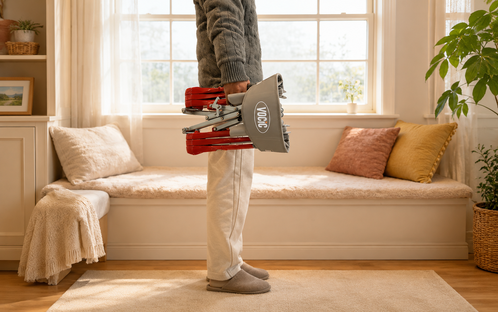
Knowing how to fold a walker makes storage, car trips, clinic visits, and travel easier. Since standard walkers, front-wheeled walkers, and rollator walkers with seats fold differently, first check your walker type and place it on a flat surface. Keep your hands away from hinges and release buttons, and never force the frame if it feels stuck or uneven.
What Type of Walker Do You Have?
Different walker types use different folding systems. Start by identifying your walker before trying to close it.
Standard Walker
A standard walker usually has four legs and no seat. Many models fold by pressing release buttons or push pins on the frame, then bringing both sides inward. This type is often used by people who need steady support and slower movement.
Front-Wheeled Walker
A front-wheeled walker has wheels on the front legs and rubber tips or glides on the back legs. It may fold like a standard walker, but the front wheels can affect how it sits in a car trunk or closet. Make sure the wheels face a stable direction before storing it.
Rollator Walker with Seat
A rollator walker usually has three or four wheels, hand brakes, and often a built-in seat. Many rollators fold by lifting the seat, pulling a center strap, or pushing the frame together. Because rollators have brakes, wheels, bags, and seats, they need a few extra checks before folding.
How Do You Fold a Standard Walker?
Most standard walkers fold in a simple side-inward motion. The goal is to release the frame without twisting or forcing the legs.
Stand Behind the Walker
Place the walker on a flat floor and stand behind it, where the handles face you. This gives you better control and helps keep the frame from tipping while you fold it.
Find the Release Buttons
Look for release buttons, push pins, or folding levers on the upper frame. They are usually near the front crossbar or side joints. Press the button on one side first, then the other side if the walker has two release points.
Fold Both Sides Inward
After releasing the frame, bring each side inward toward the center. Keep fingers away from the hinges. If one side folds and the other does not, check whether the second release button is fully pressed.
Check the Frame Before Carrying
Once folded, make sure the frame stays closed enough to lift safely. Hold the walker by the main frame, not by loose tips, wheels, trays, or accessories. If the walker opens while being carried, check whether the folding latch or side frame is fully engaged.
How Do You Fold a Rollator Walker?
A rollator walker has more moving parts than a standard walker, so using a rollator walker safely and effectively starts with taking a few extra seconds before folding it. The process may vary by model, but the basic steps are similar.
Lock the Brakes First
Lock the brakes before folding a rollator. This keeps the wheels from rolling while you handle the frame. Brake locks are also important before sitting, standing, loading the rollator into a car, or storing it on a slightly uneven surface.
Remove Bags and Loose Items
Take out personal items from the storage bag, basket, or seat pouch. Water bottles, phones, keys, medication, and documents can fall out or add weight while folding. Removing them also prevents the bag from blocking the folding mechanism.
Lift the Seat or Folding Strap
Many rollator walkers fold from the center. Some have a fabric strap under the seat, while others fold when you lift the seat upward. Pull gently until the frame begins to close.
Push the Frame Together
Once the center begins to fold, guide both sides toward each other. Keep the wheels straight and avoid pushing on brake cables. If the frame resists, stop and check for a full storage bag, a stuck strap, or an accessory blocking the joint.
Check That It Stays Folded
Before lifting the rollator, check whether it stays closed. Some models have a latch, strap, or frame tension that keeps them folded. If it opens too easily, use the manufacturer’s folding lock if provided.

What Should You Check After Folding a Walker?
Folding the walker is only part of the process. A quick check helps prevent damage, storage problems, or unsafe reopening.
Frame Lock
Check whether the frame remains folded and whether any latch or lock is secure. A loose frame can open suddenly when carried or stored.
Brake Position
For rollators, confirm that the brakes are not pulled, twisted, or caught around the frame. If the brakes feel loose after folding or transport, check how to tighten rollator brakes before using the walker again. Brake cables should sit naturally and should not be bent sharply.
Wheels and Bags
Make sure wheels are not turned in a way that makes the walker unstable. Remove or secure bags, trays, cane holders, cup holders, and loose accessories before transport.
Storage Space
Place the folded walker where it will not block walkways, doors, beds, or bathroom access. At home, store it in a dry area away from clutter. In a car, keep it flat or secured so it does not shift while driving.
Why Is My Walker Hard to Fold?
If a walker will not fold, do not force it. Most folding problems come from blocked parts, stuck release buttons, frame misalignment, or damaged hardware.
Stuck Release Buttons
Release buttons can become stiff from dirt, rust, pressure, or long-term use. Press the button firmly and check whether anything is blocking it. If the button stays stuck, avoid using tools that could damage the frame.
Full Storage Bag
A rollator may refuse to fold when the storage bag is full. Remove heavy or bulky items and try again. Bags can also catch on the frame or stop the seat from lifting properly.
Misaligned Frame
A walker may fold unevenly if the frame is twisted or one side is not fully released. Place it on a flat surface, straighten the wheels, and check both sides before folding again.
Damaged Folding Parts
Bent hinges, cracked joints, loose screws, or damaged brake cables can stop a walker from folding safely. If the frame looks damaged or will not lock open after folding, contact the manufacturer, seller, or mobility equipment provider before using it again.
How Can You Store or Transport a Folded Walker?
A folded walker should be easy to move without creating new safety problems. The right storage method depends on whether you are using it at home, loading it into a car, or bringing it to appointments.
Car Trunk Storage
Place the folded walker flat in the trunk when possible. Keep heavier luggage away from brake cables, wheels, and the seat area. If the walker is a rollator, make sure the brakes and handles are not pressed under heavy items.
The VOCIC Z35 PackGo is a strong fit for users who often fold a rollator and place it in a car, bring it to clinics, or store it during travel. Its compact fold helps reduce the usual problem of a bulky rollator taking over the trunk or hotel room. The lightweight frame also makes repeated lifting easier for caregivers who need to pack, unpack, and move the walker several times in one day.
Home Storage
At home, store the folded walker near the area where it will be used next, but keep it out of walking paths. Avoid leaning it against unstable furniture. If the walker does not stand securely when folded, lay it flat or place it in a closet with enough room around it.
Travel and Clinic Visits
For travel, practice folding and unfolding the walker before the trip. This helps users and caregivers handle it faster in parking lots, airports, hotel rooms, and clinic entrances. Add a name tag if the walker may be handled by staff or stored with other mobility aids.
Conclusion
Folding a walker depends on the walker type. A standard walker usually folds by pressing frame release buttons and bringing both sides inward. A rollator walker usually folds by locking the brakes, removing loose items, lifting the seat or folding strap, and guiding the frame together. The safest approach is to fold slowly, keep fingers away from hinges, check that the frame stays closed, and avoid using the walker again if it will not lock open properly.
FAQ
Can a folded walker stand upright by itself?
Some walkers can stand upright after folding, but many cannot. It depends on the frame design, wheel position, and folding mechanism. If the walker does not stand securely, place it flat in a safe area or lean it against a stable surface where it will not slide or fall.
Can you put a folded walker in a car trunk?
Yes, most folding walkers and rollator walkers can fit in a car trunk, but the fit depends on the folded size and trunk space. Before a trip, fold the walker at home and test how it fits in the trunk or back seat. Remove storage bags or loose items if extra space is needed.
Is it safe to carry a walker by the seat or wheels?
It is better to carry a folded walker by the main frame or designated handle area. Carrying it by the seat, wheels, brake cables, or storage bag may bend parts or make the walker harder to control. For rollators, keep the frame closed firmly before lifting.
How often should you check the folding parts on a walker?
Check the folding parts regularly, especially if the walker is used every day or transported often. Look for loose screws, stiff buttons, bent frame sections, worn cables, or parts that no longer lock smoothly. A walker that folds or opens unevenly should be inspected before continued use.
When should you stop using a walker that does not fold correctly?
Stop using the walker if the frame will not lock open, the brakes do not hold, the release buttons are stuck, or the folding joint looks bent or damaged. These issues can affect stability while walking. Contact the manufacturer, seller, or a mobility equipment provider before using it again.


Share:
4 Best Lightweight Rollator Walkers with Seat for 2026
How Often Will Medicare Replace a Rollator Walker?