
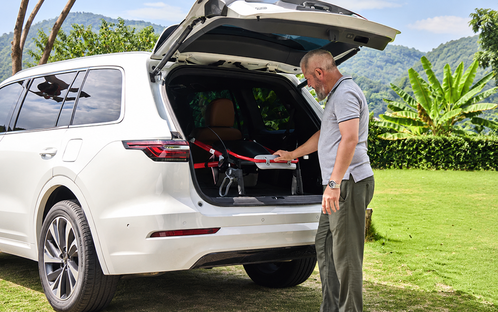
A lightweight rollator walker with a seat should make daily movement easier without making the user feel less supported. The best choice is not always the lowest-weight model. It should be light enough to lift, easy to fold, stable while walking, and comfortable enough for short rest breaks.
For most seniors and caregivers, the key is balance. A good lightweight rollator should be practical for the places it will actually be used, such as at home, in a car trunk, at a clinic, during errands, or on short outdoor walks.
Quick Picks: Best Lightweight Rollator Walkers with Seat
|
Model |
Best For |
Weight |
Weight Capacity |
Main Advantage |
|
VOCIC Z35 PackGo Foldable Lightweight Rollator |
Travel, compact storage, car trunks, and small homes |
12.6 lbs |
300 lbs |
Ultra-compact fold for easier transport |
|
VOCIC Z12 Lightweight Foldable Rollator Walker |
Everyday walking, comfort, and value |
12.68 lbs |
380 lbs |
Budget-friendly comfort with higher weight capacity |
|
byACRE Carbon Ultralight Rollator |
Premium ultralight mobility and frequent outings |
10.6 lbs |
285 lbs |
Carbon fiber frame with very low weight |
|
Medline Ultralight Freedom Rollator |
Simple lightweight support and smooth indoor surfaces |
12.6 lbs |
250 lbs |
Basic lightweight design for easy daily handling |
How Lightweight Should a Rollator Walker with Seat Be?
A rollator walker can be called lightweight because it is easier to lift than a standard rollator, but that does not mean every lightweight model feels equally easy to use.
For many users, a practical lightweight range is around 11 to 13 lbs. This range can make a rollator easier to lift into a car, carry through a doorway, or store in a small space. Models in this range can still include a seat, backrest, brakes, and a usable frame.
Ultralight rollators go even lower in weight. They can be helpful for active users, frequent travelers, or people who often lift their rollator without help. However, buyers should still check seat height, wheel size, brake control, and weight capacity. A lighter rollator only helps when it still fits the user’s body and daily walking environment.
Best Lightweight Rollator Walkers with Seat in 2026
The rollators below cover different lightweight needs. Some are better for compact travel and storage, while others focus on everyday comfort, premium ultralight design, or simple value. Instead of choosing only by weight, compare how each model fits the user’s lifting needs, walking environment, seat use, and storage space.
VOCIC Z35 PackGo Foldable Lightweight Rollator
Best for: travel, compact storage, car trunk use, cruises, and small homes
Key specs:
- Weight: 12.6 lbs
- Weight capacity: 300 lbs
- Folded dimensions: 21.2 x 11 x 7 in
- Folded volume: about 1 cubic foot
- Seat dimensions: 17.2 x 8.4 in
- Seat height: 22.4 in
- Handle height range: 30.7 to 37.5 in
- Wheel size: 3.6 in front and rear
- Frame material: magnesium alloy
Why it stands out:
The VOCIC Z35 PackGo is the most travel-focused option in this list. Its biggest advantage is not only that it weighs 12.6 lbs, but that it folds into a much smaller shape than a traditional rollator. The six-way folding structure gives it a folded volume of about 1 cubic foot, which makes it easier to place in a car trunk, closet, travel bag, or small storage space.
This makes the Z35 especially useful for users and caregivers who struggle with bulky rollators during trips, clinic visits, road travel, cruises, or everyday car loading. It still includes seated support and a 300-lb capacity, so it is not just a minimal walking frame.

VOCIC Z12 Lightweight Foldable Rollator Walker
Best for: everyday walking, comfort-focused support, and users who want a lightweight rollator for routine use
Key specs:
- Weight: 12.68 lbs
- Weight capacity: 380 lbs
- Version: lightweight Z12
- Design: foldable rollator walker with seat
- Use case: daily walking, errands, appointments, short rests, and indoor-outdoor movement
- Support focus: seated comfort, walking support, and easier daily handling
Why it stands out:
The VOCIC Z12 Lightweight Foldable Rollator Walker is a practical choice for users who want lightweight daily support rather than a highly compact travel rollator. At 12.68 lbs, it fits within the practical lightweight range while focusing on seated comfort and routine walking needs.
Compared with the Z35, the Z12 is better for everyday usability than ultra-small storage. It works well for errands, appointments, home movement, and short outdoor walks when users want a familiar rollator frame with a comfortable place to rest.

byACRE Carbon Ultralight Rollator
Best for: premium ultralight performance, active users, and frequent outings
Key specs:
- Weight: 10.6 lbs
- Weight capacity: 285 lbs
- Frame material: carbon fiber
- Folded width: about 9.8 in
- Wheel size: about 7.9 in
- Use case: city environments, travel, shopping, and smoother outdoor paths
Why it stands out:
The byACRE Carbon Ultralight is the premium ultralight option in this comparison. At 10.6 lbs with a carbon fiber frame, it is designed for users who want easier lifting, smoother handling, and a more refined mobility aid.
It is a strong match for active users who go out often, move through city environments, or want a modern-looking rollator that feels less bulky than many value-focused models.
Medline Ultralight Freedom Rollator
Best for: simple lightweight support, smooth indoor surfaces, and value-focused buyers
Key specs:
- Weight: 12.6 lbs
- Weight capacity: 250 lbs
- Wheel size: 6 in
- Seat height range: 18 to 23 in
- Overall width: 24.5 in
- Handle height range: 29.5 to 36 in
- User height range: about 4 ft 11 in to 6 ft 4 in
- Brakes: loop-style brakes
- Includes: a basket bag and a folding strap
Why it stands out:
The Medline Ultralight Freedom Rollator is the simplest value-focused option in this list. At 12.6 lbs, it gives users a lightweight frame with the basic features many people expect, including a seat, backrest, storage bag, loop-style brakes, and an easy folding design.
Its 6-inch wheels are best suited to indoor surfaces and smoother paved areas, such as clinics, malls, apartments, and everyday errands. The adjustable seat and handle height also make it flexible for a broad user height range.
This model makes sense for buyers who want a straightforward lightweight rollator without paying for premium materials or a more specialized travel fold.
Who Should Choose a Lightweight Rollator Walker with Seat?
A lightweight rollator walker with seat is a good choice for users who can walk on their own but need help with balance, endurance, or short rest breaks. For families still deciding who should use a rollator walker, this type of support is especially useful for seniors who get tired during errands, people who visit clinics often, and caregivers who need a rollator that is easier to lift or transport.
This type of rollator may be less suitable for users who need to put a lot of body weight on the walker, cannot control hand brakes safely, have severe balance problems, or need a larger heavy-duty frame. A rollator should not be used as a transport chair unless the product is specifically designed for that purpose.
What to Look for in a Lightweight Rollator Walker with Seat
The rollators in this guide were compared based on weight, folded size, seat usability, brake control, frame support, daily-use scenarios, and overall value. A good lightweight rollator walker with seat should be easy to lift, stable enough for daily use, simple to fold, and comfortable enough for short rest breaks.

Weight and Folded Size
Weight matters most when the rollator needs to be lifted, stored, or transported. Since lightweight models can still vary in shape and folding style, compare both carry weight and folded dimensions before choosing.
A rollator that is light but bulky may still be difficult to manage during travel or daily storage. Users who often ride in cars, visit clinics, or travel should check whether the rollator can be lifted and stored comfortably.
Seat Comfort and Back Support
The seat should feel stable and comfortable enough for short rest breaks during errands, appointments, or walks. Look at seat width, seat height, padding, and back support instead of only checking whether the rollator includes a seat.
A good seat should allow the user to rest with both feet placed comfortably on the ground. Before sitting, the brakes should be locked, and the rollator should be on a flat, stable surface.
Brake Control and Parking Stability
Brakes are one of the most important safety features on a rollator with seat. The user should be able to slow down, stop, and lock the rollator without strain.
Parking stability also matters because the rollator must stay still when the user sits down or stands up. If the brakes feel hard to squeeze or unreliable, the rollator may not be a good fit for daily use.
Wheel Size for Indoor, Outdoor, and Travel Use
Think about where the rollator will be used most often. For indoor use, overall width, turning space, and handle height matter more than large wheels. The rollator should move easily through doorways, hallways, bathrooms, and kitchens without feeling bulky.
For outdoor walks, wheel size and braking control become more important. Smooth sidewalks, clinics, malls, and paved paths may work well with smaller or mid-size wheels. Rougher sidewalks, parks, uneven paths, or cobblestone areas usually need wheels that feel more stable and easier to control.
For travel, folded size can matter as much as weight. A lightweight rollator should be easy to fold, lift into a car trunk, store in a small home, or carry during trips. Users who travel often may prefer a compact folding design, while users who mainly walk around the neighborhood may care more about seat comfort and outdoor stability.
Weight Capacity and Frame Support
A lightweight frame should still match the user’s body size and support needs. Check the stated weight capacity, but also consider how stable the rollator feels when turning, stopping, and sitting.
Users who need stronger support, a wider seat, or better performance on rough outdoor ground may prefer a standard or heavy-duty rollator instead of the lightest model available.
Safety Checks Before Using a Lightweight Rollator
A lightweight rollator can be safe when it fits the user and is used correctly, which is why using a rollator walker safely and effectively starts with proper height adjustment, brake checks, and seated stability. Before regular use, adjust the handle height so the user can walk upright with a slight bend in the elbows. Check that the brakes slow the rollator smoothly and lock firmly before the user sits down.
Always lock the brakes before sitting on the seat. The rollator should be on a flat and stable surface. Do not sit on a rollator while someone pushes it unless the model is specifically designed and approved for transport use.
It is also helpful to test the rollator in the places where it will be used most often. Try it through doorways, around furniture, in the bathroom area, near the car, and on the sidewalks or paths the user visits regularly.
Conclusion
The best lightweight rollator walker with seat depends on how the user moves every day. For compact storage and travel, the VOCIC Z35 PackGo is the strongest fit. For everyday comfort and higher stated capacity, the VOCIC Z12 is a practical value choice. For premium ultralight performance, the byACRE Carbon Ultralight stands out. For simple lightweight support on smoother surfaces, the Medline Ultralight Freedom Rollator is a straightforward option.
Choose based on the user’s body size, walking environment, braking ability, lifting needs, and how often the seat will be used. A good lightweight rollator should make daily movement easier while still feeling safe, stable, and comfortable.
FAQ
Are lightweight rollators safe for seniors?
Yes, lightweight rollators can be safe for seniors when the model fits the user’s height, weight, balance, and walking environment.
Can a lightweight rollator be used outdoors?
Yes, but outdoor performance depends on wheel size, braking control, and terrain. Smooth sidewalks, malls, clinics, and paved paths are usually easier for lightweight rollators. Rough sidewalks, gravel, grass, or uneven paths may require a more outdoor-focused model with larger wheels.
Can you sit on a rollator and be pushed?
No, a standard rollator should not be used like a wheelchair. The seat is for resting when the rollator is stopped and the brakes are locked. Sitting while someone pushes the rollator can create a fall risk unless the product is specifically designed as a transport chair.
Will a lightweight rollator fit in a car trunk?
Many lightweight rollators can fit in a car trunk, but folded size matters as much as weight. A compact model such as the VOCIC Z35 is easier to store in tight spaces, while a more traditional rollator may still be light but take up more room when folded.
Share:
Lightweight Folding Travel Walker with Seat: How to Choose for Easy Trips
How to Fold a Walker: Standard Walkers and Rollator Walkers